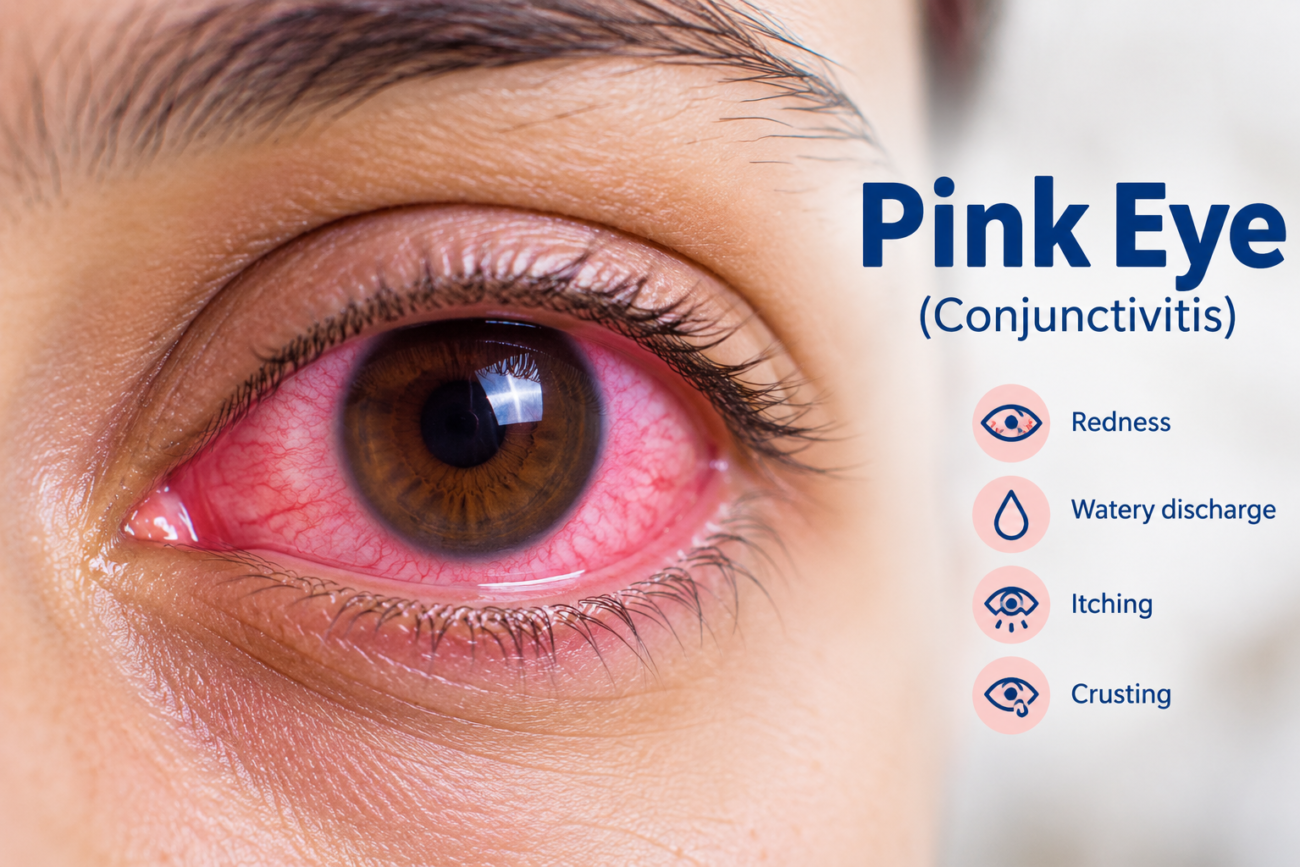
Pink eye, medically known as conjunctivitis, is a common condition that causes redness and inflammation of the conjunctiva, the thin membrane covering the white part of the eye and lining the inside of the eyelid. It can affect one or both eyes and may cause watering, discharge, itching, burning, swelling, or a gritty sensation.
Although pink eye is often mild and clears without complications, the cause matters. Viruses, bacteria, allergies, and irritants can all produce similar-looking symptoms, but they are not treated in exactly the same way. Viral and bacterial forms can also spread to other people, while allergic and irritant-related conjunctivitis are not contagious.
Understanding the symptoms, likely causes, treatment options, and warning signs can help you manage mild cases appropriately and recognize when professional eye care is important.
Key Takeaways
- Pink eye, or conjunctivitis, causes inflammation of the conjunctiva and commonly produces redness, watering, irritation, and discharge.
- Viruses, bacteria, allergies, and irritants are among the main causes.
- Viral and bacterial pink eye can be highly contagious, while allergic and irritant-related cases are not.
- Mild viral pink eye often improves without specific treatment, while some bacterial cases may require antibiotic treatment.
- Cold compresses and artificial tears can help relieve irritation and dryness.
- Eye pain, light sensitivity, persistent blurred vision, intense redness, worsening symptoms, or symptoms in a newborn require prompt medical attention.
What Is Pink Eye?
Pink eye is the common name for conjunctivitis, inflammation of the conjunctiva. When this thin tissue becomes inflamed, blood vessels become more visible, making the white of the eye appear pink or red.
Pink eye can develop at any age. The condition may be caused by an infection, an allergic reaction, or irritation from substances such as smoke, dust, chemicals, or a foreign object. Contact lens use can also be associated with eye problems that require careful evaluation.
Because several different conditions can produce a red eye, redness alone does not always establish that someone has infectious conjunctivitis.
Common Symptoms of Pink Eye
Symptoms vary according to the underlying cause, but common signs include:
- Pink or red discoloration of the white of the eye
- Swollen eyelids
- Watery eyes
- Itching or irritation
- Burning or discomfort
- A gritty or “something is in my eye” sensation
- Mucus or pus-like discharge
- Crusting around the eyelashes, particularly after sleeping
- Increased sensitivity or discomfort while wearing contact lenses
Some people develop symptoms in only one eye initially, while others have symptoms in both eyes. Viral conjunctivitis, for example, often starts in one eye and may spread to the other within several days.
Symptoms That Can Help Identify the Cause
The symptoms can provide clues, although they cannot always confirm the cause on their own.
| Likely Type | Common Pattern |
|---|---|
| Viral | Watery discharge, redness, irritation; may occur with a cold or respiratory infection |
| Bacterial | Thicker discharge or pus that may make the eyelids stick together |
| Allergic | Significant itching, watering, swelling, often affecting both eyes |
| Irritant-related | Watering, redness, and irritation after exposure to smoke, dust, chemicals, or another irritant |
These patterns overlap, so a healthcare professional may need to consider the person’s history and other symptoms before determining the likely cause.
What Causes Pink Eye?
Viral Pink Eye
Viruses are a common cause of conjunctivitis. Adenoviruses are among the viruses associated with pink eye, and viral conjunctivitis can occur alongside a cold or another respiratory infection.
Viral pink eye is contagious and can spread through close contact, respiratory droplets, contaminated surfaces, or touching the eyes with unwashed hands.
Bacterial Pink Eye
Certain bacteria can cause conjunctivitis. Bacterial cases may produce thicker discharge that causes the eyelids to stick together.
Bacterial pink eye can spread easily between people. It may occur alongside other infections, particularly in children.
Allergic Pink Eye
Allergic conjunctivitis occurs when the eyes react to allergens such as pollen, dust mites, mold, or animal dander.
Unlike infectious pink eye, allergic conjunctivitis is not contagious. It often causes intense itching, watering, and swelling in both eyes and may occur with other allergy symptoms such as sneezing or an itchy nose.
Irritant-Related Conjunctivitis
The eyes can also become inflamed after exposure to irritants. Examples include:
- Smoke
- Dust
- Chemical fumes
- Certain chemicals
- Foreign material in the eye
- Some problems related to contact lens use
These cases are not spread from person to person like infectious conjunctivitis.
Is Pink Eye Contagious?
Some types of pink eye are contagious and others are not.
Viral and bacterial conjunctivitis can spread readily from one person to another. Transmission can occur through close personal contact, respiratory droplets, or touching contaminated objects and then touching the eyes.
Allergic and irritant-related conjunctivitis are not contagious.
If infectious pink eye is suspected, good hygiene is particularly important. Regular handwashing, avoiding eye rubbing, and not sharing towels, cosmetics, eye drops, pillows, or other personal items can reduce the chance of spreading infection.
How Is Pink Eye Diagnosed?
A healthcare professional can often identify conjunctivitis by examining the eye and considering the person’s symptoms and medical history.
In some situations, additional testing may be needed. This is particularly relevant when symptoms are severe, persistent, unusual, or not responding as expected.
It is important not to assume that every red eye is simple pink eye. Conditions affecting other parts of the eye can also cause redness and may require urgent treatment.
Pink Eye Treatment
Treatment depends on the underlying cause.
Treatment for Viral Pink Eye
Most uncomplicated viral conjunctivitis is mild and improves without antimicrobial treatment. The CDC notes that many cases clear within 7 to 14 days, although some can take two to three weeks or longer.
Antibiotics do not treat viral infections.
For symptom relief, cold compresses and artificial tears may help reduce irritation, dryness, and inflammation.
Certain more serious viral infections may require specific antiviral treatment prescribed by a healthcare professional.
Treatment for Bacterial Pink Eye
Some mild bacterial cases improve without antibiotics. Other cases may be treated with antibiotic eye drops or ointment, depending on the circumstances.
Antibiotics may be considered when there is significant discharge, certain bacterial infections are suspected, or a person has an increased risk of complications. A healthcare professional should determine whether antibiotic treatment is appropriate.
Antibiotics should not be used simply because an eye is red. They do not treat viral or allergic conjunctivitis.
Treatment for Allergic Pink Eye
The first step is often reducing or avoiding exposure to the suspected allergen.
Depending on the symptoms, healthcare professionals may recommend allergy medicines or appropriate eye drops. The best option can depend on the individual’s symptoms and other health considerations.
Managing Symptoms at Home
For mild conjunctivitis, several measures can make the eyes more comfortable:
- Apply a clean, cool compress to closed eyes.
- Use artificial tears when appropriate to relieve dryness or irritation.
- Gently clean discharge from around the eyes with clean materials.
- Wash your hands before and after touching or cleaning your eyes.
- Avoid rubbing your eyes.
- Stop wearing contact lenses until symptoms have resolved or an eye doctor says it is safe to resume them.
How Long Does Pink Eye Last?
The duration depends largely on the cause.
- Viral pink eye: Often improves within 7–14 days, but some cases last two to three weeks or longer.
- Bacterial pink eye: Mild cases may improve within a few days without treatment, although complete recovery can take longer.
- Allergic pink eye: Symptoms generally improve when exposure to the allergen is reduced or appropriate allergy treatment is used.
- Irritant-related conjunctivitis: Improvement depends on removing the irritant and whether the eye has sustained additional injury.
If symptoms are getting worse instead of better, medical evaluation is appropriate.
How to Prevent Pink Eye
Good hygiene is one of the most practical ways to reduce the spread of infectious conjunctivitis.
Wash Your Hands Frequently
Wash your hands with soap and water for at least 20 seconds, especially after touching your eyes, cleaning eye discharge, or being around someone with infectious conjunctivitis.
Avoid Touching or Rubbing Your Eyes
Touching the eyes with contaminated hands can introduce germs and may also spread infection from one eye to the other.
Don’t Share Personal Items
Avoid sharing:
- Towels and washcloths
- Pillowcases
- Eye makeup
- Makeup brushes
- Eye drops
- Contact lenses or contact lens cases
- Eyeglasses
Regularly washing towels, bedding, and other potentially contaminated items can also help reduce transmission.
Practice Good Contact Lens Hygiene
Contact lens wearers should follow their eye-care professional’s instructions for cleaning, storage, replacement, and wearing schedules.
If you develop pink eye, stop wearing contact lenses until symptoms have resolved or an eye doctor advises that you can safely wear them again. Disposable lenses and cases used during an infection may need to be discarded according to professional guidance.
When Should You See a Doctor for Pink Eye?
Many mild cases can be managed conservatively, but certain symptoms warrant professional medical attention.
Seek medical care if you have:
- Significant eye pain
- Sensitivity to light
- Blurred vision that does not improve after discharge is cleared
- Intense eye redness
- Symptoms that are worsening or failing to improve
- A weakened immune system
- Concerning symptoms while wearing contact lenses
Newborns with symptoms of pink eye should be evaluated by a healthcare professional immediately because conjunctivitis in newborns can sometimes be serious.
Contact lens wearers deserve particular caution because bacterial conjunctivitis can be associated with a higher risk of bacterial keratitis, a potentially serious infection of the cornea. Prompt eye evaluation is important when a contact lens wearer develops concerning symptoms.
Pink Eye in Children
Children commonly encounter infectious conjunctivitis because close contact in schools, childcare settings, and households can facilitate transmission.
Parents and caregivers can reduce spread by encouraging frequent handwashing and discouraging children from touching or rubbing their eyes. Personal towels, pillows, eye products, and other items should not be shared when infection is suspected.
Whether a child should attend school or childcare depends on the child’s symptoms, the suspected cause, local policies, and advice from a healthcare professional. Children who cannot avoid close contact with others while they have infectious conjunctivitis may need to stay home.
Pink Eye vs. Other Causes of Red Eyes
Not every red eye is conjunctivitis.
Eye redness can occur for several reasons, including allergies, irritation, injury, contact lens complications, and other eye conditions. Symptoms such as significant pain, light sensitivity, persistent vision changes, or severe redness are particularly important because they can indicate a problem requiring prompt evaluation.
For that reason, self-diagnosis based solely on eye redness is not always reliable.
Frequently Asked Questions
Is pink eye contagious?
Viral and bacterial pink eye are contagious and can spread through close contact, respiratory droplets, contaminated surfaces, or unwashed hands. Allergic and irritant-related conjunctivitis are not contagious.
Can pink eye go away on its own?
Yes. Many mild cases, particularly viral conjunctivitis, resolve without specific medical treatment. Viral cases commonly improve within 7–14 days, although some take longer.
Do antibiotics treat pink eye?
Antibiotics can be used for some bacterial cases, but they do not treat viral or allergic conjunctivitis. A healthcare professional can determine whether antibiotic treatment is appropriate.
Can I wear contact lenses with pink eye?
It is best to stop wearing contact lenses while you have pink eye. Resume wearing them only after symptoms have resolved or your eye doctor says it is safe.
How can I prevent pink eye from spreading?
Wash your hands frequently, avoid touching your eyes, don’t share towels or eye products, clean potentially contaminated items, and avoid close contact when infectious conjunctivitis is suspected.
Can allergies cause pink eye?
Yes. Allergens such as pollen, dust mites, mold, and animal dander can cause allergic conjunctivitis. It commonly causes intense itching, watering, and swelling and is not contagious.
When is pink eye an emergency?
Severe or concerning symptoms such as significant eye pain, light sensitivity, persistent blurred vision, or intense redness require prompt medical evaluation. Newborns with suspected pink eye should be evaluated immediately.
How long should I stay away from work or school with pink eye?
There is no single rule that applies to every case. The decision depends on the cause, symptoms, ability to avoid close contact, and workplace or school policies. For infectious cases, follow healthcare guidance and practice careful hygiene to reduce transmission.
Conclusion
Pink eye is a common condition with several possible causes, including viruses, bacteria, allergies, and irritants. Recognizing the differences between these causes is important because treatment and contagiousness can vary.
Mild cases may improve with supportive care such as cool compresses and artificial tears, while some bacterial infections require medical treatment. Good hand hygiene, avoiding eye rubbing, not sharing personal items, and taking appropriate precautions with contact lenses can help reduce transmission.
Most importantly, do not ignore warning signs. Eye pain, light sensitivity, persistent vision changes, intense redness, worsening symptoms, or pink eye in a newborn should be assessed by a healthcare professional promptly.
