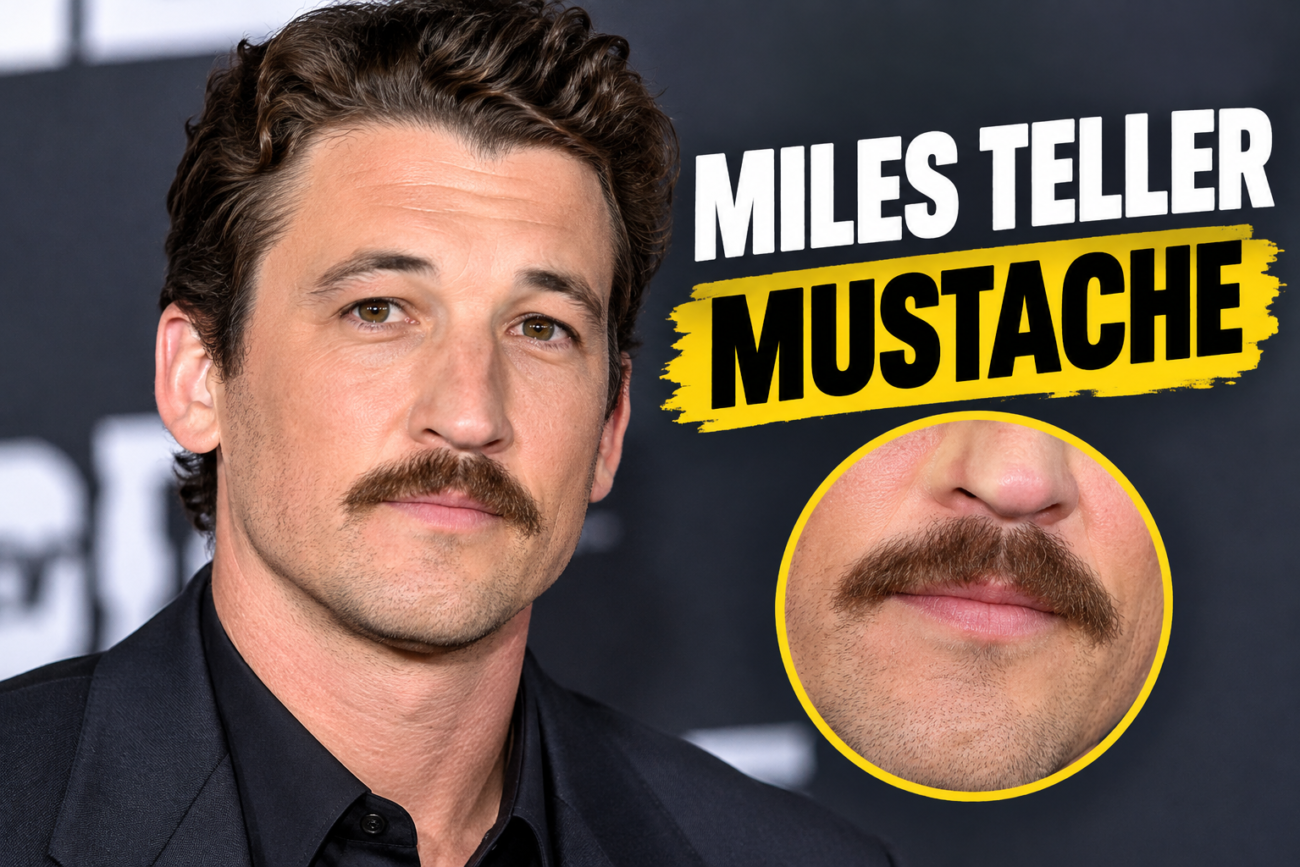
The Miles Teller mustache has become one of the actor’s most recognizable style features, particularly among fans who remember his performance as Lieutenant Bradley “Rooster” Bradshaw in Top Gun: Maverick. With its classic shape and distinctly retro appeal, the mustache helped reinforce the character’s connection to the original Top Gun film while giving Teller a memorable look of his own.
But the interest in Teller’s facial hair goes beyond a single movie. His appearance has sparked conversations about men’s grooming, vintage-inspired mustaches, and the influence that film characters can have on everyday fashion. A well-shaped mustache can change the impression a person makes, adding definition to the upper lip and creating a more mature or rugged appearance.
So, what makes Miles Teller’s mustache so recognizable? Is it simply a matter of growing facial hair, or does the shape, grooming, and connection to his on-screen character make the difference?
This guide explores the style behind Teller’s mustache, its association with Top Gun: Maverick, the grooming techniques that can help recreate a similar look, and the answers to common questions fans ask about his facial hair.
Key Takeaways
-
Miles Teller’s mustache is especially associated with his role as Rooster in Top Gun: Maverick.
-
The look draws on classic men’s grooming styles, combining a defined upper-lip mustache with a rugged, military-inspired character aesthetic.
-
Facial hair can look different depending on its thickness, length, surrounding beard growth, lighting, and styling.
-
Recreating a similar mustache requires patience, regular trimming, and careful attention to the lip line.
-
Teller’s movie appearance offers inspiration, but the best mustache style depends on individual facial features and natural hair growth.
Biography Table
| Detail | Information |
|---|---|
| Full Name | Miles Alexander Teller |
| Date of Birth | February 20, 1987 |
| Age | 39 as of October 2026 |
| Birthplace | Downingtown, Pennsylvania, United States |
| Nationality | American |
| Profession | Actor |
| Education | Tisch School of the Arts, New York University |
| Years Active | 2004–present |
| Known For | Whiplash, The Spectacular Now, Top Gun: Maverick, and The Fantastic Four |
| Major Achievements | Critical recognition for Whiplash and international recognition for Top Gun: Maverick |
| Estimated Net Worth | Public estimates vary and are not reliably verified |
The Story Behind Miles Teller’s Mustache
Why Miles Teller’s Mustache Became So Popular
Miles Teller’s mustache attracted widespread attention after audiences saw him in Top Gun: Maverick, the 2022 sequel to the 1986 action film Top Gun. Teller plays Rooster, the son of Nick “Goose” Bradshaw, the character portrayed by Anthony Edwards in the original movie.
Rooster’s appearance deliberately echoes elements of his father’s familiar look. The mustache, aviator-inspired styling, and relaxed confidence help establish a visual connection between the two characters without making them identical.
That connection is an important reason the facial hair stands out. It is not simply a grooming choice; it contributes to the character’s identity and the film’s nostalgic atmosphere.
The Influence of Top Gun: Maverick

In Top Gun: Maverick, Rooster combines a traditional mustache with a casual, athletic appearance. His style feels contemporary while recalling the original film’s visual identity.
Several elements contribute to the look’s appeal:
-
Character connection: The mustache reinforces Rooster’s relationship with his father, Goose.
-
Retro influence: It recalls classic men’s grooming trends associated with the 1970s and 1980s.
-
Distinctive appearance: The facial hair helps distinguish Rooster from other characters.
-
Simple styling: The mustache complements his hairstyle and casual wardrobe without appearing overly elaborate.
Together, these elements make the style recognizable even outside the film.
How the Mustache Supports Rooster’s Character
Costume design and grooming can communicate information about a character before the dialogue begins. Rooster’s facial hair contributes to his confident, approachable, and slightly old-fashioned appearance.
The mustache also helps the filmmakers create a visual link to Goose. That connection matters because Rooster’s family history is central to the story.
The result is a look that serves a storytelling purpose while also becoming a popular source of men’s grooming inspiration.
What Type of Mustache Does Miles Teller Have?

The style associated with Teller in Top Gun: Maverick is best described as a classic, natural-looking mustache with a defined upper-lip outline.
It has a traditional appearance rather than the exaggerated curls of a handlebar mustache or the narrow shape of a pencil mustache.
Although people sometimes use specific style names interchangeably, the most useful way to describe Teller’s look is by its visible characteristics.
1. Natural Thickness
The mustache has enough visible density to stand out against the surrounding skin. It does not rely on an extremely thin outline or elaborate shaping.
Natural thickness is important to the overall effect. A fuller mustache can create a stronger visual contrast around the mouth, while a thinner one may produce a more understated appearance.
2. A Defined Upper-Lip Line
A neat lip line keeps the facial hair from extending too far over the mouth. This detail makes the mustache appear intentional rather than untrimmed.
The goal is not necessarily to create a perfectly straight edge. Instead, the hair should follow the natural shape of the upper lip.
3. Minimal Styling
Teller’s character does not wear an elaborate, sculpted mustache. The style looks relatively natural, which makes it easier to adapt for everyday grooming.
That simplicity is part of its appeal. It offers a recognizable vintage influence without requiring dramatic shaping or extensive styling products.
4. Balance With the Rest of the Face
A mustache rarely works in isolation. Its appearance depends on the wearer’s nose, mouth, jawline, hair density, and other facial features.
The look associated with Teller is effective because it complements the rest of his character’s styling rather than competing with it.
How to Get a Mustache Like Miles Teller
You do not need to copy every detail of Teller’s appearance to achieve a similar style. The most practical approach is to use his mustache as inspiration and adapt the shape to your natural facial hair.

Step 1: Allow Your Mustache to Grow
Start by giving the hair above your upper lip enough time to grow.
Depending on your genetics, facial hair may grow unevenly at first. Some people develop a full mustache quickly, while others need considerably more time to achieve visible density.
Avoid making aggressive adjustments during the early stages. Letting the hair grow gives you a better idea of its natural shape and coverage.
Step 2: Choose a Natural Shape
Once the mustache has enough length, decide how closely you want to follow Teller’s classic look.
Aim for:
-
Moderate, natural-looking thickness.
-
A shape that follows the upper lip.
-
A relatively clean outline.
-
No exaggerated curls or sharply sculpted points.
Your natural growth pattern should guide the final shape. If the hair grows more densely at the center than at the edges, work with that pattern instead of trying to force perfect symmetry.
Step 3: Trim Carefully Around the Lips
A mustache can quickly look untidy when the hair covers too much of the upper lip.
Use a facial-hair trimmer with a suitable guard to remove excess length gradually. For detailed adjustments, a small grooming scissors can help you control individual hairs.
Trim small amounts at a time. It is easier to remove more hair later than to correct a mustache that has been cut too short.
Step 4: Keep the Edges Tidy
A natural-looking mustache still benefits from maintenance.
Check the areas beside the mouth and the edges of the mustache. Remove stray hairs that disrupt the intended shape, but avoid creating an unnaturally sharp outline if you want a relaxed, classic appearance.
The aim is to look groomed without making the facial hair seem overly designed.
Step 5: Use Products Sparingly
Most short, natural mustaches do not require much product.
A small amount of beard conditioner or a product designed for facial hair may help manage dryness and improve softness. Mustache wax is generally more useful when you want stronger hold or a more sculpted shape.
For a style inspired by Teller, heavy wax and dramatic shaping are usually unnecessary.
Step 6: Maintain the Look Regularly
How often you need to trim depends on your growth rate and preferred length.
Some people benefit from checking their mustache every few days, while others can leave it for a week or longer between trims. Focus on keeping the lip line comfortable and the overall shape consistent.
Miles Teller’s Mustache Before and After
Interest in Miles Teller’s mustache often leads to searches for before-and-after photographs. These comparisons can be useful, but it is important to distinguish between changes in an actor’s everyday appearance and styling choices made for particular roles.
Actors regularly change their hair, facial hair, clothing, and overall appearance to suit different characters. A clean-shaven photograph and a photograph featuring a mustache do not necessarily represent a permanent transformation.
Before the Mustache Became Widely Recognized
Teller has appeared in films and public photographs with different grooming styles. His appearance in earlier projects, including The Spectacular Now and Whiplash, differs from the recognizable Rooster look.
These differences illustrate how facial hair can influence an actor’s visual identity. A clean-shaven face may emphasize the jawline and other facial features, while a mustache draws additional attention to the mouth and center of the face.
The Look During Top Gun: Maverick
The mustache became particularly associated with Teller’s portrayal of Rooster.
Its importance comes from more than the facial hair itself. The combination of the mustache, hairstyle, aviator-inspired clothing, and character background created a cohesive appearance that audiences could readily recognize.
Does a Mustache Change a Person’s Appearance?
Yes, facial hair can change how facial proportions and features are perceived.
A mustache may:
-
Draw attention toward the mouth.
-
Create a stronger horizontal line across the upper lip.
-
Make the lower half of the face appear more visually defined.
-
Add a mature or vintage-inspired quality to an overall look.
However, these effects vary from person to person. Facial shape, hair density, length, and personal styling all influence the final result.
Miles Teller’s Mustache Compared With a Clean-Shaven Look
Both styles can work well, but they create different visual impressions.
| Feature | Mustache Style | Clean-Shaven Style |
|---|---|---|
| Overall appearance | More textured and distinctive | Simpler and more understated |
| Focus | Draws attention to the upper lip | Leaves the face unobstructed by facial hair |
| Grooming | Requires trimming and edge maintenance | Requires regular shaving |
| Style influence | Classic, retro, and rugged | Clean, versatile, and contemporary |
| Main consideration | Natural density and suitable shape | Skin comfort and shaving frequency |
Teller’s mustache is especially memorable because it became part of a recognizable movie character. A clean-shaven appearance can be equally effective in a different role or setting.
For everyday grooming, the better choice depends on your preferences, facial-hair growth, skin sensitivity, and how much maintenance you want.
Why Classic Mustaches Remain Popular

Classic mustaches have moved in and out of fashion for decades. Their continued appeal comes partly from their versatility: they can look traditional, playful, rugged, or contemporary depending on their shape and how they are styled.
The Influence of Film and Television
Popular films often introduce or revive recognizable grooming trends. When an actor wears a distinctive hairstyle or mustache, viewers may associate it with the character’s personality and the story itself.
Rooster’s mustache demonstrates how a relatively simple grooming choice can become an identifiable part of a character’s look.
Personal Style and Individuality
A mustache also gives people a way to experiment with their appearance without changing their haircut or wardrobe significantly.
Some prefer a fuller, more traditional shape. Others choose a narrow, subtle mustache or combine facial hair with a short beard.
The key is to choose a style that complements your face and feels comfortable in everyday life.
Practicality and Maintenance
Classic mustaches are not automatically maintenance-free. Even a natural-looking style needs occasional trimming and cleaning around the lips.
Fortunately, a straightforward shape is often easier to maintain than one that requires extensive sculpting or daily styling.
Common Mistakes When Recreating Miles Teller’s Mustache
If you want to imitate Teller’s style, a few simple mistakes are worth avoiding.
Trimming Too Much Too Soon
Cutting the mustache too short can make it difficult to achieve the fuller appearance you want. Allow enough growth before deciding on the final shape.
Forcing a Shape Your Hair Cannot Support
Not everyone has the same facial-hair density. If your mustache grows sparsely at the corners, trying to reproduce an identical shape may create an uneven result.
Adapt the style to your natural growth rather than treating a celebrity photograph as a precise template.
Ignoring the Lip Line
Hair that repeatedly falls over the upper lip can make eating and drinking uncomfortable. Keep the edge tidy without removing so much hair that the mustache loses its intended shape.
Using Too Much Styling Product
Heavy wax can make a natural mustache appear stiff or overly shiny. Start with minimal product and add more only if your hair needs extra control.
Expecting Identical Results
Photographs are influenced by lighting, camera angles, grooming, and professional styling. Your mustache may look different even when you use similar techniques.
A successful result should suit your face rather than reproduce every detail of a movie still.
Frequently Asked Questions
1. Why is Miles Teller’s mustache so famous?
Miles Teller’s mustache became particularly recognizable through his role as Rooster in Top Gun: Maverick. It contributes to the character’s retro-inspired appearance and reinforces his visual connection to Goose from the original film.
2. Did Miles Teller grow a mustache for Top Gun: Maverick?
Teller’s mustache is part of Rooster’s on-screen appearance. Without a reliable production statement confirming the exact grooming process, it is best not to assume whether every detail came from natural growth, trimming, or other styling techniques.
3. What is Miles Teller’s mustache style called?
It is commonly described as a classic natural mustache with moderate thickness and a defined upper-lip outline. It is not an elaborate handlebar style.
4. How can I grow a mustache like Miles Teller?
Allow your facial hair to grow, observe its natural density, and trim it gradually into a shape that follows your upper lip. Maintain the edges and use minimal styling product for a natural finish.
5. How long does it take to grow a similar mustache?
Growth time varies considerably with genetics, age, hormones, and individual hair-growth patterns. Some people develop a noticeable mustache within a few weeks, while others need several months to achieve their preferred thickness.
6. Does Miles Teller’s mustache suit every face shape?
No single mustache style suits everyone equally. A similar look can be adapted for different faces by adjusting its width, thickness, and length to complement natural features.
7. Is Miles Teller’s mustache part of his everyday look?
Teller’s appearance varies across film roles, public appearances, and photographs. The mustache is especially associated with his portrayal of Rooster, so it should not automatically be treated as his permanent everyday style.
8. What products do I need to maintain a similar mustache?
A quality facial-hair trimmer, small grooming scissors, and a gentle cleanser are useful starting points. A facial-hair conditioner or a small amount of mustache wax can be added if needed, but elaborate styling products are not essential.
Conclusion
The Miles Teller mustache is a strong example of how a simple grooming detail can become an important part of a memorable screen character. Its association with Rooster in Top Gun: Maverick, its classic shape, and its connection to the original film have helped make it a popular reference for men’s facial-hair styles.
Recreating the look does not require professional styling or an extensive grooming routine. Allow your facial hair to grow, work with its natural density, maintain a neat lip line, and make gradual adjustments to achieve a balanced appearance.
Most importantly, treat Teller’s mustache as inspiration rather than a strict template. The most successful style is one that complements your facial features, fits your preferences, and remains easy to maintain.
