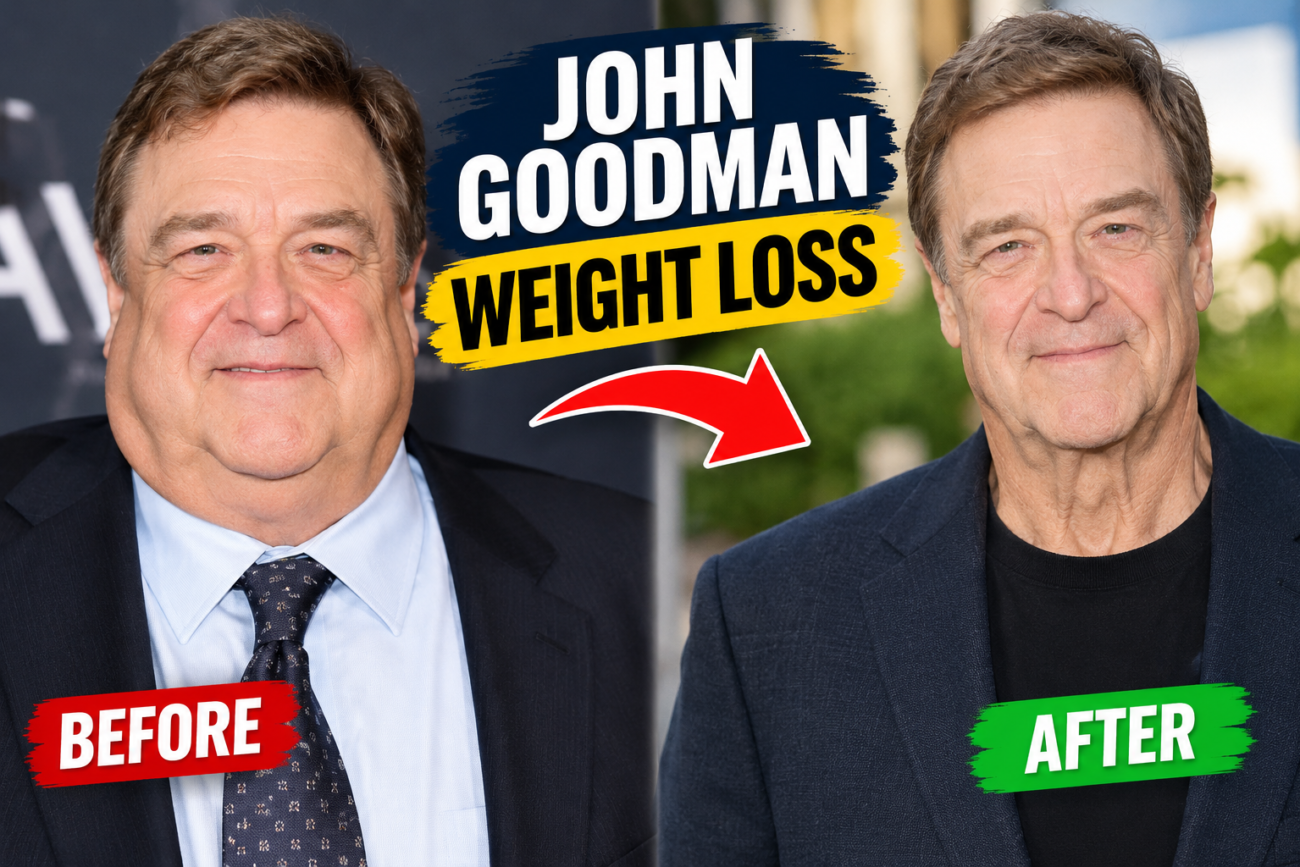
John Goodman has spent decades entertaining audiences with memorable performances in television and film. Best known for playing Dan Conner in Roseanne and appearing in movies such as The Big Lebowski and The Flintstones, the American actor has also attracted public attention for a significant change in his physical appearance.
The topic of John Goodman weight loss continues to interest fans who want to understand how he changed his lifestyle, what motivated him, and which habits he adopted along the way. His transformation has often been discussed in connection with healthier eating, regular physical activity, and a more consistent approach to personal well-being.
However, it is important to separate publicly reported information from speculation. Not every claim about a celebrity’s diet, exercise routine, or exact weight is supported by reliable evidence.
This article explores John Goodman’s background, his publicly discussed weight-loss journey, the lifestyle changes associated with his transformation, and the broader lessons readers can take from his experience.
Key Takeaways
- John Goodman is an American actor known for Roseanne, The Big Lebowski, and numerous other television and film productions.
- His substantial change in appearance attracted widespread public attention over several years.
- Goodman has publicly discussed making changes to his eating habits and becoming more physically active.
- His transformation is commonly associated with consistency and long-term lifestyle changes rather than a single quick fix.
- Exact weight figures, daily calorie targets, and detailed medical explanations should not be treated as established facts without reliable confirmation.
- His experience illustrates why sustainable habits are generally more useful than extreme, short-term approaches to weight management.
John Goodman Biography
| Category | Details |
|---|---|
| Full Name | John Stephen Goodman |
| Date of Birth | June 20, 1952 |
| Age | 74 as of October 2026 |
| Birthplace | Affton, Missouri, United States |
| Nationality | American |
| Profession | Actor and voice actor |
| Education | Southwest Missouri State University, now Missouri State University |
| Years Active | 1975–present |
| Known For | Roseanne, The Big Lebowski, The Flintstones, and Monsters, Inc. |
| Major Achievements | Multiple major acting award nominations and a Golden Globe Award for Roseanne |
John Goodman Weight Loss: What Happened?
John Goodman‘s weight loss became a frequent subject of entertainment news and public discussion as his appearance changed noticeably over time. Audiences who had followed his career for decades began comparing his later public appearances with photographs from earlier stages of his life.
Goodman has spoken publicly about his weight and lifestyle in interviews over the years. His transformation has been associated with changes to his diet, increased physical activity, and a more deliberate effort to improve his health.
Rather than viewing the change as the result of one special product or an overnight solution, it is more useful to understand it as a longer-term process involving everyday habits.
When Did John Goodman Begin Losing Weight?
There is no single, universally established date that marks the beginning of Goodman’s weight-loss journey. His appearance changed over an extended period, and public attention increased as the difference became more noticeable.
Reports and interviews from the 2000s and 2010s helped bring greater attention to his efforts. Over time, photographs from premieres, interviews, and other public appearances provided visible evidence of his changing appearance.
It is worth remembering that photographs capture individual moments. Lighting, clothing, camera angles, and the timing of a photograph can influence how a person’s size appears. A series of public appearances can illustrate a change in appearance, but it cannot independently establish someone’s exact weight or explain the medical reasons behind that change.
How Much Weight Did John Goodman Lose?
Goodman is widely reported to have lost a substantial amount of weight. Some entertainment reports have cited a figure of approximately 100 pounds, although figures repeated across celebrity websites are not always independently verified.
For that reason, readers should treat precise numbers cautiously unless they can be traced to a credible, direct statement or a reliable interview.
The broader point is that his transformation was significant enough to attract attention well beyond his usual acting work. His changing appearance became part of the public conversation about his career, health, and personal lifestyle.
Why Did His Transformation Attract So Much Attention?
Goodman had been a familiar face on television and in movies for decades. His role as Dan Conner made him especially recognizable, and audiences often associated his appearance with the character’s working-class, everyday personality.
When his appearance changed substantially, longtime viewers naturally noticed.
Several factors contributed to the interest:
- A long-established public image: Fans had seen him in television reruns, films, and interviews for many years.
- Visible changes over time: His later appearances looked noticeably different from some earlier photographs.
- Health and lifestyle interest: People often want to know whether a public figure’s transformation involved changes in diet, exercise, or daily routines.
- Celebrity reporting: Entertainment publications frequently cover well-known actors’ physical transformations, sometimes repeating figures or explanations without sufficient context.
Goodman’s story is therefore both a celebrity news topic and an opportunity to discuss the difference between appearance-focused coverage and meaningful lifestyle change.
What Lifestyle Changes Were Associated With John Goodman’s Weight Loss?
Goodman’s transformation has commonly been linked to healthier eating habits and regular physical activity. Although not every detail of his personal routine is publicly established, the broad principles associated with his journey are consistent with widely recommended approaches to weight management.
1. Making Changes to Eating Habits
Food choices can influence body weight over time. Goodman’s reported efforts have been associated with paying greater attention to his diet and reducing habits that made maintaining a healthy weight more difficult.
A balanced eating pattern does not require eliminating every favorite food. Instead, it can involve making everyday choices that provide adequate nutrition while helping a person manage overall energy intake.
Examples of practical dietary changes include:
- Eating more vegetables, fruits, and other fiber-rich foods.
- Choosing protein sources such as fish, eggs, beans, poultry, or tofu.
- Including whole grains where appropriate.
- Paying attention to portion sizes.
- Reducing frequent consumption of highly processed snacks and sugary drinks.
- Planning meals instead of relying on convenience foods every day.
These examples describe general approaches to healthier eating, not a verified meal plan followed by Goodman.
A sustainable diet should also account for personal preferences, cultural food traditions, health needs, and affordability. A routine that is realistic enough to maintain is often more useful than a highly restrictive plan that becomes difficult to follow.
2. Reducing Alcohol Consumption
Some reports discussing Goodman’s lifestyle changes have mentioned reducing or giving up alcohol. Alcohol can contribute additional calories and may affect sleep, appetite, and decision-making around food.
However, the details and timing of individual lifestyle changes should be based on reliable reporting rather than assumptions.
For people who drink alcohol, reducing consumption may be one part of a broader health plan. Anyone who drinks heavily or may be physically dependent on alcohol should seek medical guidance before stopping suddenly, because withdrawal can be dangerous.
The lesson is not that alcohol explains every weight-loss journey. It is that understanding personal habits can help identify changes that support broader health goals.
3. Becoming More Physically Active
Regular movement is another important part of long-term weight management. Goodman has been associated in public reporting with adopting a more active lifestyle.
Physical activity can support cardiovascular health, muscular strength, mobility, mood, and the maintenance of weight loss. It does not have to involve an extreme exercise program.
For many adults, a realistic routine might include:
- Walking regularly at a comfortable pace.
- Taking movement breaks during long periods of sitting.
- Performing strength exercises suited to individual ability.
- Choosing enjoyable activities that encourage consistency.
- Increasing activity gradually rather than making sudden, demanding changes.
These are general recommendations rather than a description of Goodman’s confirmed workout schedule.
The most appropriate activity level depends on a person’s age, health, fitness, and mobility. Anyone with significant health concerns should discuss a new exercise program with a qualified healthcare professional.
4. Focusing on Consistency
A lasting physical transformation generally requires more than a few weeks of effort. Changes in eating patterns, activity, sleep, and other daily routines can accumulate over months and years.
Goodman’s publicly discussed transformation is often presented as an example of making changes over time rather than relying on an instant solution.
Consistency does not mean perfection. People may experience periods when their routines change because of travel, work, family responsibilities, or illness. Returning to sustainable habits after a disruption is often more useful than abandoning a plan because progress was not perfectly linear.
5. Considering Overall Well-Being
Weight is only one measure of health. Fitness, sleep quality, mobility, blood pressure, metabolic health, mental well-being, and the ability to perform everyday activities can also matter.
It would be inappropriate to infer Goodman’s private medical history or current health status from photographs alone. His physical appearance does not reveal every aspect of his health.
A more balanced view of his transformation recognizes that sustainable lifestyle changes can have benefits beyond the number shown on a scale.
John Goodman’s Weight Loss Timeline
Goodman’s transformation is best understood as a gradual change over several years rather than a single event.
Early Career: Establishing His Public Image
During the early decades of his career, Goodman became known for his imposing screen presence, expressive acting, and ability to combine humor with emotional depth. His performances in television and film made him one of the most recognizable character actors of his generation.
His physical appearance was sometimes discussed alongside his acting roles, but it was his performances that established his reputation.
The 2000s: Growing Attention to Health
As Goodman continued working, his weight and lifestyle became subjects of public discussion. Reports from this period and the years that followed associated his efforts with changes to eating habits and personal routines.
It is important not to assign a precise starting date without dependable documentation. Celebrity coverage often combines information from interviews published at different times, which can make a long-term journey appear more straightforward than it actually was.
The 2010s: A More Noticeable Transformation
By the 2010s, Goodman’s changed appearance was receiving considerable attention. Photographs from public events and interviews showed a noticeable difference compared with many images from earlier in his career.
His transformation prompted renewed discussion of diet, exercise, and the importance of maintaining healthy habits. Nevertheless, photographs cannot establish the exact amount of weight lost or prove which individual habits produced the change.
Later Years: Continued Public Interest
Goodman has continued his acting career while public interest in his physical transformation has remained strong.
His experience demonstrates how a long-term personal change can become part of a celebrity’s public narrative. It also highlights the importance of distinguishing between what an individual has discussed directly and what entertainment coverage merely suggests.
Did John Goodman Follow a Specific Diet?
There is no need to assume that Goodman followed a single branded diet to explain his transformation. Public discussions of his weight loss have emphasized broader lifestyle changes, but a complete, independently verified record of his daily meals is not established.
Several well-known eating approaches can help people manage their weight, including balanced calorie-controlled diets and eating patterns that emphasize minimally processed foods. None is automatically suitable for everyone.
What a Balanced Eating Pattern Can Look Like
A practical approach may include:
| Food Group | Examples | Potential Benefit |
|---|---|---|
| Vegetables | Broccoli, carrots, spinach | Provides fiber and essential nutrients |
| Fruits | Apples, berries, oranges | Supplies fiber, vitamins, and minerals |
| Protein | Eggs, fish, beans, chicken | Supports muscle maintenance and fullness |
| Whole grains | Oats, brown rice, whole-wheat bread | Provides carbohydrates and fiber |
| Healthy fats | Nuts, seeds, olive oil | Supplies essential fats and can improve meal satisfaction |
| Water and unsweetened drinks | Water, unsweetened tea | Supports hydration without adding substantial calories |
This table is an example of a balanced eating pattern, not Goodman’s personal menu.
The right balance depends on individual nutritional requirements, medical conditions, and activity levels. A registered dietitian can help people develop an appropriate plan without unnecessary restriction.
What Can People Learn From John Goodman’s Transformation?
The interest in John Goodman’s weight loss extends beyond celebrity news because many people are looking for realistic ways to improve their own health.
Although his personal circumstances are different from those of most readers, several general lessons can be drawn from sustainable weight management.
Set Realistic Goals
Large goals can feel overwhelming when people focus only on the final result. Breaking a long-term goal into smaller, achievable steps can make progress easier to monitor.
For example, someone beginning a fitness routine might start with short walks several days a week before gradually increasing the duration or intensity.
A healthcare professional can help determine whether weight loss is appropriate and what pace makes sense for an individual’s circumstances.
Avoid Extreme Diets
Severely restrictive diets can be difficult to maintain and may lead to nutritional deficiencies or other health problems.
A sustainable approach usually emphasizes adequate nutrition, manageable portions, and habits that fit everyday life. The objective should be improved health rather than copying a celebrity’s appearance.
Combine Nutrition With Movement
Food choices and physical activity work together in a broader weight-management plan. Regular exercise can support physical function and cardiovascular health, while dietary changes can help people manage their energy intake.
A balanced routine does not require intense workouts every day. Activities that can be maintained consistently are often a more realistic starting point.
Measure Progress Beyond the Scale
Body weight can fluctuate because of hydration, food intake, and other normal changes. It is therefore useful to consider more than one indicator of progress.
Depending on a person’s goals, useful measures might include:
- Improved stamina during everyday activities.
- Better consistency with physical activity.
- Increased strength or mobility.
- Improved sleep habits.
- Health measurements monitored with a clinician.
- Greater confidence in maintaining a balanced routine.
These indicators provide a broader perspective than appearance alone.
Seek Professional Guidance When Necessary
Weight management can be affected by medications, hormonal changes, sleep problems, medical conditions, and many other factors. A plan that works for one person may not be appropriate for another.
Anyone considering substantial dietary changes or a demanding exercise routine should consider their medical circumstances and seek professional guidance when appropriate.
How John Goodman’s Career Continued Alongside His Transformation
Goodman’s weight loss is only one part of his public story. His acting career spans television comedy, drama, major studio films, and voice acting.
Roseanne and His Breakthrough as Dan Conner
Goodman became widely recognized through Roseanne, in which he played Dan Conner. The character helped establish him as a leading television performer and earned him significant industry recognition.
His work on the series demonstrated his ability to combine comic timing with warmth and emotional complexity.
Film Roles That Expanded His Reputation
Goodman also built an extensive film career. His performances in The Big Lebowski, The Flintstones, and O Brother, Where Art Thou? introduced him to different audiences and showcased his versatility.
He has also appeared in films such as Argo and 10 Cloverfield Lane, demonstrating his ability to move between comedy and suspense.
Voice Acting and Family Entertainment
Goodman is familiar to younger audiences through his voice work as James P. Sullivan, also known as Sulley, in Pixar’s Monsters, Inc. and related productions.
His ability to work across live-action and animated roles has helped sustain his presence in popular entertainment.
His professional achievements provide important context: although his physical transformation attracts attention, his acting talent and extensive body of work remain central to his legacy.
Frequently Asked Questions
1. How much weight did John Goodman lose?
Goodman is widely reported to have lost approximately 100 pounds. However, precise figures repeated by entertainment websites should be treated cautiously unless supported by reliable, direct confirmation.
2. How did John Goodman lose weight?
His transformation has been associated with changes to eating habits, increased physical activity, and broader lifestyle adjustments. Not every detail of his personal routine is publicly verified.
3. When did John Goodman lose weight?
His changing appearance attracted greater attention during the 2000s and 2010s. His transformation appears to have occurred over an extended period rather than at one clearly established moment.
4. Did John Goodman follow a special diet?
There is no need to attribute his results to a particular branded diet. Public discussions have emphasized healthier habits, but a complete, verified daily meal plan is not established.
5. Did exercise contribute to John Goodman’s transformation?
Physical activity has been associated with his lifestyle changes. However, a detailed, independently verified exercise schedule is not publicly established. Regular movement is generally beneficial for overall health and weight management.
6. Was John Goodman’s weight loss related to a medical procedure?
Claims about specific medical procedures should not be accepted without reliable confirmation. His appearance alone cannot establish whether he underwent surgery or received a particular medical treatment.
7. Is John Goodman still acting after losing weight?
Yes. Goodman has continued his career in film, television, and voice acting. His professional work remains an important part of his public identity.
8. Can people copy John Goodman’s weight-loss approach?
People can adopt general habits associated with sustainable weight management, such as balanced eating and regular activity. However, they should not assume that an actor’s personal circumstances, health needs, or results will match their own. Individualized guidance is more useful than trying to reproduce a celebrity’s appearance.
Conclusion
John Goodman‘s weight loss has attracted considerable attention because it represents a noticeable change in the appearance of an actor audiences have known for decades. His transformation has been associated with healthier eating habits, increased physical activity, and a longer-term commitment to lifestyle changes.
Although many details repeated online remain difficult to verify precisely, the broader message is straightforward: sustainable health improvements generally depend on realistic habits rather than quick fixes or extreme restrictions.
Goodman’s story also offers an important reminder that a person’s appearance tells only part of the story. His lasting contribution to entertainment comes from decades of memorable performances, and his weight-loss journey is just one aspect of his wider life and career.
For readers interested in improving their own well-being, the most useful takeaway is to focus on balanced nutrition, manageable activity, consistency, and professional advice when needed. Those principles offer a more reliable foundation for long-term health than comparisons with any celebrity.
