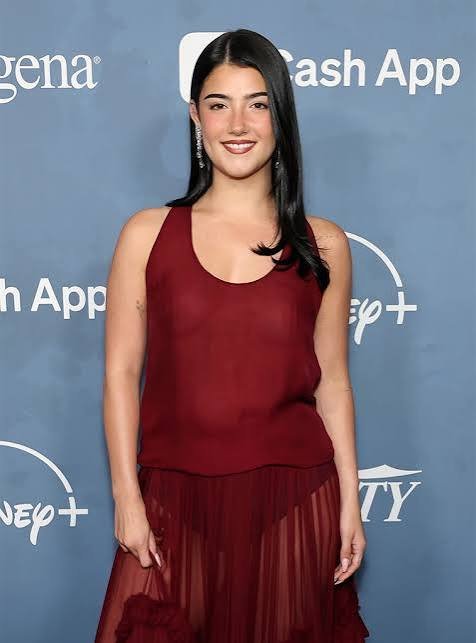
The search term “charli d’amelio nip slip” reflects the curiosity that can surround a public figure when rumors about an alleged wardrobe malfunction circulate online. As one of the most recognizable personalities to emerge from TikTok, Charli D’Amelio attracts significant attention across social media, entertainment websites, and online search platforms.
However, a popular search term does not automatically establish that an incident occurred. Viral posts, misleading headlines, edited images, and unverified claims can spread quickly, leaving readers unsure about what is genuine and what is speculation.
Understanding this topic requires separating confirmed information from online rumors. It also means recognizing the difference between a verified public appearance, an unsubstantiated claim, and content that has been edited or shared without its original context.
This article examines the search surrounding Charli D’Amelio, explains how alleged celebrity wardrobe malfunctions become online talking points, and offers practical ways to evaluate information responsibly. The goal is to provide useful context without presenting unverified allegations as established facts.
Key Takeaways
-
Charli D’Amelio is an American social media personality who rose to prominence through TikTok dance videos.
-
The search phrase “charli d’amelio nip slip” alone does not confirm that a wardrobe malfunction occurred.
-
Viral celebrity claims should be evaluated using reliable reporting and original sources.
-
Cropped images, edited clips, and misleading captions can distort the context of an event.
-
Respectful coverage distinguishes legitimate public information from intrusive speculation about someone’s body or private life.
Charli D’Amelio Biography
| Category | Details |
|---|---|
| Full Name | Charli Grace D’Amelio |
| Date of Birth | May 1, 2004 |
| Age | 22 as of October 2026 |
| Birthplace | Norwalk, Connecticut, United States |
| Nationality | American |
| Profession | Social media personality, dancer, and television personality |
| Education | Attended King School in Stamford, Connecticut |
| Years Active | 2019–present |
| Known For | TikTok dance videos, social media content, and reality television |
| Major Achievements | Became one of TikTok’s most-followed creators and won the 31st season of Dancing with the Stars with Mark Ballas |
| Estimated Net Worth | Public estimates vary and are not independently verified |
Who Is Charli D’Amelio?
Charli D’Amelio became widely known in 2019 after posting dance videos on TikTok. Her approachable style, participation in popular dance trends, and consistent online presence helped her build a substantial audience in a relatively short period.
Her popularity eventually expanded beyond short-form videos. She appeared in television projects, participated in commercial partnerships, and developed opportunities in entertainment and business.
In 2022, she competed on Dancing with the Stars alongside professional dancer Mark Ballas. The pair won the competition, introducing her to audiences who might not have followed her original TikTok content.
Her public profile means that her appearances, fashion choices, performances, and personal milestones can attract widespread attention. That visibility also makes it important to evaluate claims about her carefully rather than assuming every trending topic reflects a verified event.
What Is Known About the Charli D’Amelio Nip Slip Search?
The phrase “charli d’amelio nip slip” is a search query, not proof of a specific incident. Without a reliable source identifying an event and establishing its context, it would be inaccurate to describe an alleged wardrobe malfunction as confirmed.
Online searches about celebrities often combine a person’s name with words associated with rumors, photographs, or viral clips. These searches may originate from genuine curiosity, a misleading social media post, or a headline designed to attract attention.
Several possibilities can explain why such a phrase becomes popular:
-
Unverified social media claims: A post may describe an alleged incident without providing credible evidence.
-
Misleading captions: An ordinary photograph or video may be presented with a sensational description.
-
Out-of-context footage: A brief clip may omit the surrounding events needed to understand what happened.
-
Search trends: People may search for a claim simply because others are discussing it.
-
Reposted material: Older content can circulate again with a new caption that incorrectly suggests it is recent.
These possibilities explain how the search term could attract attention, but they do not establish which explanation applies to a particular post about D’Amelio.
The most responsible conclusion is that the search phrase itself does not provide enough evidence to verify an incident. A specific claim requires credible supporting information before it can be reported as fact.
Why Do Celebrity Wardrobe Malfunction Searches Become Popular?
Celebrity culture moves quickly online. A photograph from a public appearance, a short video from an event, or a discussion on a social platform can attract attention within minutes.
Wardrobe-related searches are especially likely to generate curiosity because they combine celebrity visibility with the possibility of an unexpected moment. Some websites use this curiosity to attract visitors, even when the underlying claim is uncertain.
Three factors often contribute to this pattern.
1. Social Media Amplification
When users repeatedly share a post, comment on it, or search for related terms, the topic can gain visibility. Other users may interpret that visibility as evidence that something significant happened.
However, popularity and accuracy are separate issues. A claim can spread widely without being supported by reliable evidence.
2. Sensational Headlines
Some publishers use dramatic wording to encourage clicks. A headline may imply that a celebrity experienced a wardrobe malfunction even if the accompanying material does not establish that conclusion.
Readers should examine what an article actually demonstrates rather than relying on its headline alone.
3. Recycled Images and Videos
Older photographs and clips sometimes reappear years after their original publication. When the original date or context disappears, viewers may mistakenly believe the material documents a recent event.
Checking the original source and publication date can help identify this problem.
How to Verify Claims About an Alleged Wardrobe Malfunction
If you encounter a post related to the Charli D’Amelio nip slip search, a few simple checks can help you determine whether it deserves your attention.
Check the Original Source
Start by identifying where the claim originated. Is it from a reputable publication reporting on a clearly identified public event, or is it an anonymous account repeating an allegation?
An original video from an official event or a statement from a reliable source may provide useful context. A repost with no attribution offers much less evidence.
Look for Independent Confirmation
A claim becomes more credible when reputable outlets independently verify the relevant details. However, several websites repeating the same unverified post do not necessarily constitute independent confirmation.
Look for reporting that explains how the information was established, rather than articles that merely repeat the same wording.
Verify the Date and Context
Check whether the material has an identifiable date, location, and original publication source.
A photograph from a public appearance should not be treated as evidence of a different event simply because someone attaches a new caption to it.
Be Cautious With Edited Material
Images and videos can be cropped, altered, slowed down, or presented without surrounding footage. Even an authentic photograph can be misleading when viewers lack its original context.
Avoid reaching conclusions from a single frame or a short clip when the available information does not support them.
Respect Privacy
Not every image circulating online deserves to be redistributed. Sharing invasive or manipulated imagery can contribute to harassment and spread misinformation.
Readers can investigate whether a public claim is accurate without seeking out explicit material, reposting embarrassing images, or making assumptions about someone’s body.
The Difference Between a Viral Claim and a Verified Fact
Understanding the difference between online discussion and reliable reporting is essential when researching celebrity-related topics.
| Type of Information | What It Means | How to Evaluate It |
|---|---|---|
| Social media rumor | A claim circulating among users | Look for an identifiable source and credible confirmation |
| Viral photograph | An image receiving widespread attention | Check its original source, date, and context |
| Edited video | Footage that may have been altered or shortened | Seek the original recording when available |
| Entertainment news report | An article discussing a celebrity or public event | Evaluate the publisher’s reliability and supporting evidence |
| Verified information | A claim supported by dependable evidence | Confirm that the evidence directly supports the conclusion |
This distinction matters because repeated exposure can make an allegation seem more credible than it really is.
For example, suppose an image begins circulating with a caption alleging a wardrobe malfunction. Several accounts repost it, and a number of websites discuss the growing interest. Those actions establish that the image and claim are circulating. They do not independently prove that the alleged event occurred.
A careful reader separates the existence of online discussion from the truth of the underlying allegation.
Charli D’Amelio’s Public Image and Online Attention
Charli D’Amelio’s career illustrates how quickly a social media personality can become a subject of broader entertainment coverage.
Her early success came from dance videos and participation in online trends. As her audience expanded, her work began to include television appearances, brand partnerships, public events, and other entertainment projects.
This visibility creates opportunities but also exposes public figures to constant commentary. Clothing, photographs, relationships, and ordinary public appearances can become subjects of discussion far beyond their original context.
Why Context Matters in Celebrity Reporting
Responsible celebrity reporting should focus on information that can be established and explained.
For example, an article about a public appearance can accurately discuss the event, the outfit worn, the occasion, or the public response when those details are supported by reliable sources.
By contrast, an article should not invent an incident, infer details from an ambiguous image, or describe a rumor as confirmed simply to match a popular search phrase.
A useful article answers the reader’s question while clearly identifying what remains unknown. This approach provides more value than repeating speculation.
How Online Attention Can Affect Public Figures
Public figures often face intense scrutiny because their photographs and videos can reach millions of people. A misleading claim may be copied across platforms before the person involved has an opportunity to respond.
The effects can include reputational harm, unwanted attention, and the continued circulation of inaccurate information.
Readers can help reduce these effects by checking sources, avoiding unverified reposts, and distinguishing legitimate reporting from content designed primarily to provoke a reaction.
Frequently Asked Questions
1. What does “charli d’amelio nip slip” mean?
The phrase is a search term referring to an alleged wardrobe malfunction involving Charli D’Amelio. Its presence in search results does not establish that a specific incident occurred.
2. Is the alleged Charli D’Amelio wardrobe malfunction confirmed?
The search phrase alone does not confirm an incident. A reliable conclusion would require credible evidence identifying the event and supporting the specific claim.
3. Why is Charli D’Amelio associated with this search term?
Celebrity-related search phrases can gain attention through social media discussions, reposted images, misleading captions, or general curiosity. Without verified evidence about the origin of this particular search, it is not possible to identify a definitive reason.
4. How can I tell whether a viral celebrity photograph is authentic?
Look for the original publisher, publication date, surrounding context, and independent confirmation. Be cautious when an image appears only on anonymous accounts or has no traceable source.
5. Can a viral video be misleading even if it is genuine?
Yes. Authentic footage can still be misleading if it has been cropped, edited, or separated from its original context. The existence of a real video does not automatically validate every caption attached to it.
6. Does a trending search prove that an incident happened?
No. Search popularity indicates that people are interested in a topic, not that its underlying claims have been verified. Reliable evidence is needed to establish what happened.
7. What is Charli D’Amelio best known for?
She is best known for her TikTok dance videos, her large social media following, and her broader entertainment career, including winning Dancing with the Stars in 2022.
Conclusion
The search for “charli d’amelio nip slip” highlights a broader issue in online celebrity culture: a widely circulated phrase can create the impression that an event has been confirmed when the available evidence may not support that conclusion.
Charli D’Amelio’s public profile naturally attracts attention, but claims about her or any other public figure should be evaluated on their evidence rather than their popularity. Original sources, reliable reporting, accurate dates, and clear context remain essential when assessing viral content.
For readers, the most useful approach is straightforward: distinguish rumors from verified facts, question sensational captions, and avoid spreading material that has not been responsibly established. This makes it easier to understand celebrity news without confusing online speculation with reality.
