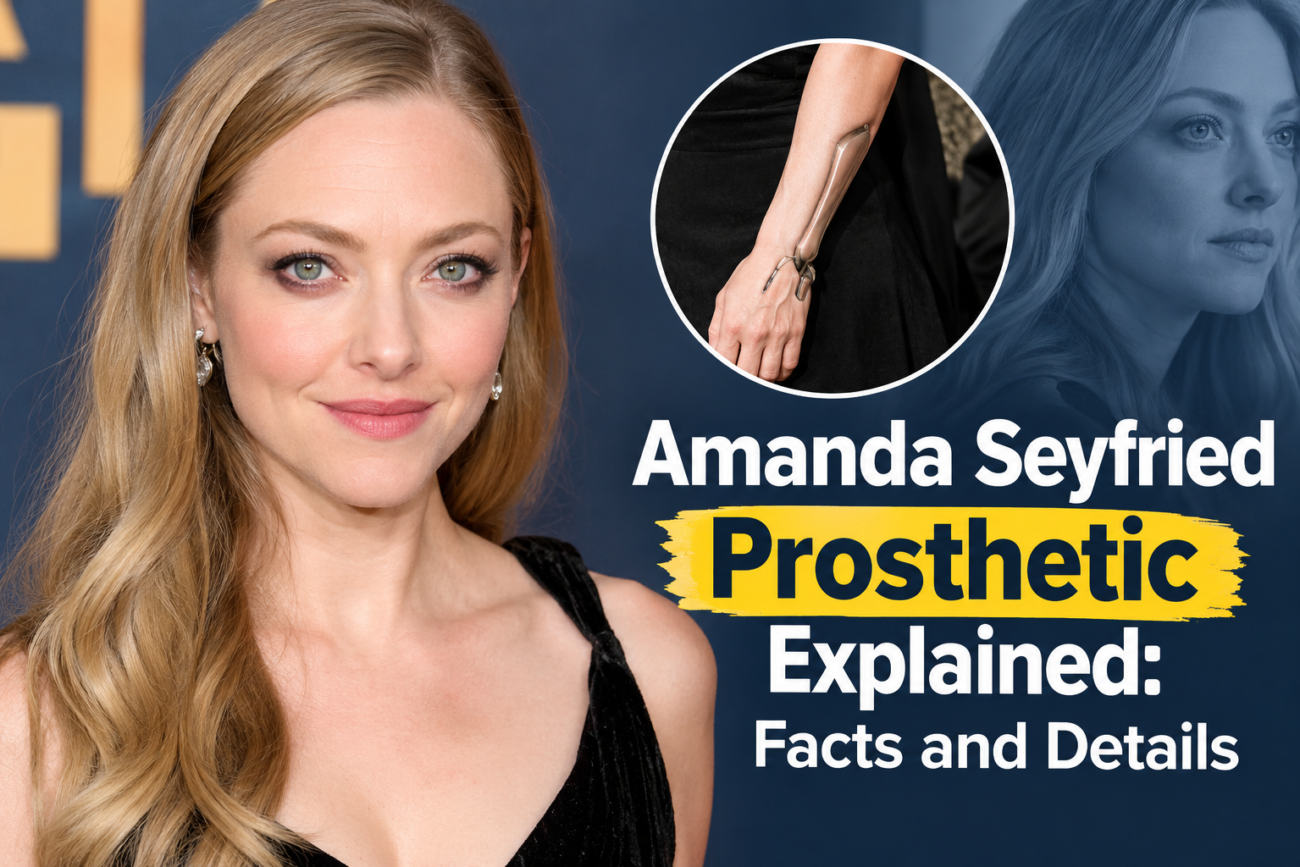
Amanda Seyfried is known for her versatility as an actress, taking on roles that range from romantic comedies and musicals to psychological dramas and historical stories. Her performances often involve detailed costumes, expressive makeup, and carefully designed visual elements that help bring characters to life. This has led some viewers to search for information about the Amanda Seyfried prosthetic and whether special-effects makeup has played a role in her on-screen transformations.
Prosthetics are widely used in the film industry to change an actor’s appearance for a particular character. They can create realistic injuries, alter facial features, reproduce historical looks, or help performers portray people whose physical characteristics differ from their own. However, not every dramatic transformation involves prosthetics. Conventional makeup, wigs, lighting, camera angles, and digital effects can also contribute to a character’s appearance.
Understanding this distinction is important when investigating claims about an actor’s work. This article explores what prosthetic makeup is, how it is used in film production, what can responsibly be established about Amanda Seyfried’s screen transformations, and how to distinguish verified information from online speculation.
Key Takeaways
-
Amanda Seyfried is an American actress known for her work in film and television across several genres.
-
Prosthetic makeup can change an actor’s appearance through realistic, specially sculpted materials.
-
A search for “Amanda Seyfried prosthetic” does not, by itself, establish that she wore a particular prosthetic for a specific role.
-
Traditional makeup, wigs, costumes, lighting, and digital effects can create transformations without prosthetics.
-
Reliable production information is the best way to confirm whether a particular character’s appearance involved prosthetic appliances.
Amanda Seyfried Biography
| Detail | Information |
|---|---|
| Full Name | Amanda Michelle Seyfried |
| Date of Birth | December 3, 1985 |
| Age | 40 years (as of October 2026) |
| Birthplace | Allentown, Pennsylvania, United States |
| Nationality | American |
| Profession | Actress, singer, and model |
| Education | William Allen High School; attended Fordham University |
| Years Active | 1996–present |
| Known For | Mean Girls, Mamma Mia!, Les Misérables, The Dropout, and The Testament of Ann Lee |
| Major Achievements | Golden Globe Award and Primetime Emmy Award winner |
Amanda Seyfried Prosthetic: What Is the Story?
The search term Amanda Seyfried prosthetic is connected to a specific behind-the-scenes detail from her performance in The Testament of Ann Lee, a historical musical drama directed by Mona Fastvold.
In February 2026, Seyfried discussed the film’s intimate scenes during an appearance on BBC Radio 2’s The Scott Mills Breakfast Show. She revealed that a prosthetic was used during filming, alongside a merkin, which is a wig designed to cover the pubic area.
Her comments attracted attention because they offered an unusual glimpse into the practical measures used to film scenes involving nudity. The detail also illustrated how a production can use body prosthetics to support a scene’s visual requirements without exposing the actor’s body in the way viewers might assume.
Importantly, Seyfried’s comments concerned the filmmaking process. They should not be confused with cosmetic surgery, a medical prosthesis, or evidence that she has undergone a permanent physical alteration.
Which Movie Featured the Prosthetic?
The film associated with this discussion is The Testament of Ann Lee, released in the United States in 2025.
Seyfried portrays Ann Lee, the historical founder of the Shaker religious movement. The film explores Lee’s life, beliefs, spiritual experiences, and journey from England to America.
Its distinctive approach combines historical storytelling with musical performances and intense dramatic scenes. The production required attention to period clothing, movement, physical performance, and the portrayal of difficult moments in the character’s life.
Seyfried’s comments about prosthetics provided an additional detail about how the production approached one of its intimate scenes.
What Prosthetic Did Amanda Seyfried Wear?
Seyfried described wearing an intimate body prosthetic while filming a nude scene. She also discussed wearing a merkin for a scene near the end of the film.
According to reports of her radio interview, she explained that the prosthetic was used even though it would not be visible in the finished scene.
This distinction matters because filming conditions and the final image are not necessarily identical. An actor may wear protective coverings, prosthetic appliances, or other materials on set that do not appear in the released movie.
The reported disclosure does not establish the exact material, manufacturer, design, or application method used for the prosthetic. Those technical details should not be assumed without further production information.
What Is a Merkin?
A merkin is a type of artificial pubic hair covering used in film, theatre, and other forms of performance.
Historically, merkins have had different uses, but in modern film production they can serve as costume or modesty-related items for scenes involving nudity.
A merkin can help filmmakers achieve a particular appearance while giving the production and performer more control over what is shown on camera.
It is different from a prosthetic body part. A merkin primarily provides hair coverage, whereas a prosthetic appliance can reproduce or alter the appearance of a specific body area.
How Prosthetics Are Used in Film Production
Prosthetic makeup is an established part of filmmaking. It allows makeup artists and special-effects teams to create physical details that would be difficult or impractical to achieve with ordinary cosmetics alone.
Although Seyfried’s reported use of a prosthetic attracted attention because of the nature of the scene, the underlying technique is part of a much broader filmmaking practice.
1. Creating Realistic Physical Details
Prosthetics can reproduce details such as scars, wounds, burns, facial features, and other physical characteristics.
Artists typically design an appliance to fit the performer’s body and blend it with the surrounding skin. The goal is to make the result convincing under the lighting and camera conditions used during filming.
2. Supporting Intimate Scenes
For scenes involving nudity or simulated physical exposure, productions may use prosthetic appliances, body coverings, and other specialized costume elements.
These techniques can help achieve the intended visual result while controlling what is actually exposed on set.
The precise approach depends on the scene, the director’s creative requirements, and the production’s arrangements with the performer.
3. Transforming Actors Into Historical Characters
Prosthetics can also help actors portray people from different periods or characters whose physical features differ from their own.
For example, makeup teams may use facial appliances to change the apparent shape of a nose, add age-related details, or reproduce distinctive features.
However, historical transformations do not automatically require prosthetics. Hair styling, makeup, costumes, and acting choices may be sufficient.
4. Creating Effects That Work on Camera
A prosthetic may look different in person than it does through a camera lens. Lighting, framing, movement, and the distance between the actor and the camera all influence the final result.
The production team must therefore consider not only how an appliance looks when applied but also how it performs during the scene.
Amanda Seyfried’s Other Notable Screen Transformations
The prosthetic discussion is one example of the physical and visual work that can support an acting performance. Seyfried has also taken on roles that required significant changes in styling, mannerisms, and presentation.
Elizabeth Holmes in The Dropout
In The Dropout, Seyfried portrayed Elizabeth Holmes, the founder of Theranos.
The transformation relied heavily on Holmes’s distinctive appearance, including her blonde hair, black turtlenecks, makeup choices, posture, and recognizable speaking voice.
Makeup artist Jorjee Douglass and the wider creative team worked to reproduce the details of Holmes’s appearance. Seyfried also studied her mannerisms to create a performance that extended beyond visual resemblance.
This role demonstrates an important distinction: an actor can undergo a convincing transformation through conventional makeup, styling, and performance without relying on extensive prosthetic appliances.
Sophie in Mamma Mia!
In Mamma Mia!, Seyfried played Sophie Sheridan, a young woman preparing for her wedding while trying to discover the identity of her father.
The character’s appearance relies on naturalistic styling, costumes, and the film’s bright Mediterranean setting. It is a useful contrast to roles that require more dramatic physical changes.
The performance illustrates how a character’s screen identity can be shaped by clothing, hair, lighting, and expressive acting rather than prosthetic makeup.
Ann Lee in The Testament of Ann Lee
As Ann Lee, Seyfried takes on a historical figure in a demanding period drama.
The production’s visual approach includes period costumes and movement designed to evoke the world in which Lee lived. The role also calls for a performance shaped by the character’s religious convictions and unusual life story.
The reported prosthetic detail belongs to the production’s practical approach to an intimate scene. It should not be interpreted as evidence that the actress underwent a broader physical transformation involving the same technique.
Prosthetic Makeup vs. Traditional Makeup
Understanding the difference between these techniques helps explain why a dramatic on-screen appearance does not necessarily indicate prosthetic use.
| Technique | Main Purpose | Typical Example |
|---|---|---|
| Traditional makeup | Changes or enhances visible features | Foundation, contouring, lipstick |
| Prosthetic makeup | Adds or reshapes physical features | Artificial scars, facial appliances |
| Hair and wigs | Changes hairstyle, color, or hair coverage | Historical hairstyles or character wigs |
| Costume design | Establishes a character’s clothing and period | Historical dresses and uniforms |
| Digital visual effects | Alters or adds elements during post-production | Digitally modified features or environments |
Productions often combine several methods. A performer might wear conventional makeup and a wig alongside a prosthetic appliance, with additional adjustments made digitally during editing.
The appropriate technique depends on the desired result, the actor’s comfort, the budget, and the demands of the scene.
Why Has the Amanda Seyfried Prosthetic Topic Attracted Attention?
Celebrity searches often begin with a surprising interview, a behind-the-scenes revelation, or a detail that viewers did not notice while watching a film.
In this case, the topic gained attention because Seyfried openly discussed a practical filmmaking detail that is rarely the main focus of promotional interviews.
Three factors help explain the interest:
-
Behind-the-scenes curiosity: Viewers enjoy learning how filmmakers create scenes that appear natural on screen.
-
Unusual production details: Intimate-scene techniques are not always discussed publicly, so an actor’s candid comments can attract attention.
-
Interest in acting preparation: Fans want to understand the practical work involved in portraying demanding roles.
The key is to distinguish a verified statement from speculation. An actor’s interview can establish that a particular technique was used, but it does not necessarily reveal every technical detail about how the production achieved its result.
How to Verify Claims About Celebrity Prosthetics
Online searches can sometimes mix confirmed production details with rumors, misleading captions, or assumptions based on photographs.
When researching a claim about an actor’s prosthetic, consider the following steps:
-
Look for the actor’s own comments. Interviews and recorded appearances can provide direct information about what happened during filming.
-
Check reputable entertainment reporting. Established publications can provide context and attribute statements to their original source.
-
Identify the specific production. A claim should connect to a named film, television episode, or scene rather than vague references to an actor’s appearance.
-
Separate prosthetics from cosmetic procedures. A temporary appliance used for a role is not evidence of surgery or a permanent change.
-
Avoid inferring private details from images. A photograph or screenshot rarely establishes which makeup or prosthetic techniques were used behind the scenes.
This approach helps readers understand the production process without spreading unsupported claims about a performer’s body or personal life.
Frequently Asked Questions
1. Did Amanda Seyfried wear a prosthetic?
Yes. In a February 2026 radio interview, Seyfried discussed wearing an intimate prosthetic while filming The Testament of Ann Lee. Reports of her comments stated that the appliance was not visible in the finished scene.
2. Which movie is associated with the Amanda Seyfried prosthetic?
The prosthetic disclosure relates to The Testament of Ann Lee, a 2025 historical musical drama directed by Mona Fastvold.
3. Why did Amanda Seyfried wear the prosthetic?
Seyfried explained that the film required a graphic scene and described the prosthetic as part of the filming process. The reported interview did not provide a detailed technical explanation of its construction.
4. What is the difference between a prosthetic and a merkin?
A prosthetic appliance can reproduce or alter the appearance of a body part. A merkin is an artificial pubic hair covering used in performance and film production. The two serve different purposes.
5. Was the prosthetic visible in the final movie?
According to reports of Seyfried’s interview, the particular prosthetic she discussed was not visible in the finished scene. This illustrates how something used during filming may not appear in the final edit.
6. Did Amanda Seyfried undergo cosmetic surgery for the role?
The reported prosthetic disclosure does not establish that Seyfried underwent cosmetic surgery. A temporary film appliance is different from a medical procedure or permanent physical alteration.
7. Did Amanda Seyfried use prosthetics in The Dropout?
Her transformation into Elizabeth Holmes is documented primarily through makeup, hair styling, clothing, and performance. The available information about that role should not be treated as proof of extensive prosthetic use.
8. Are prosthetics common in movies?
Yes. Prosthetics are widely used in film and television to create realistic physical details, support character transformations, and achieve specific visual effects. Their use varies according to the needs of each production.
Conclusion
The Amanda Seyfried prosthetic search is linked to a specific behind-the-scenes revelation about The Testament of Ann Lee. In February 2026, Seyfried discussed wearing an intimate prosthetic and a merkin during filming, offering insight into the practical techniques used to create an on-screen scene.
The broader lesson is that filmmaking involves much more than what audiences see in the finished picture. Prosthetics, traditional makeup, wigs, costumes, and visual effects can all contribute to a convincing performance, and they serve different purposes depending on the production.
For readers interested in celebrity transformations, the most reliable approach is to start with the actor’s own statements and reputable reporting. This makes it easier to separate confirmed production details from speculation while appreciating the craftsmanship behind the performance.
