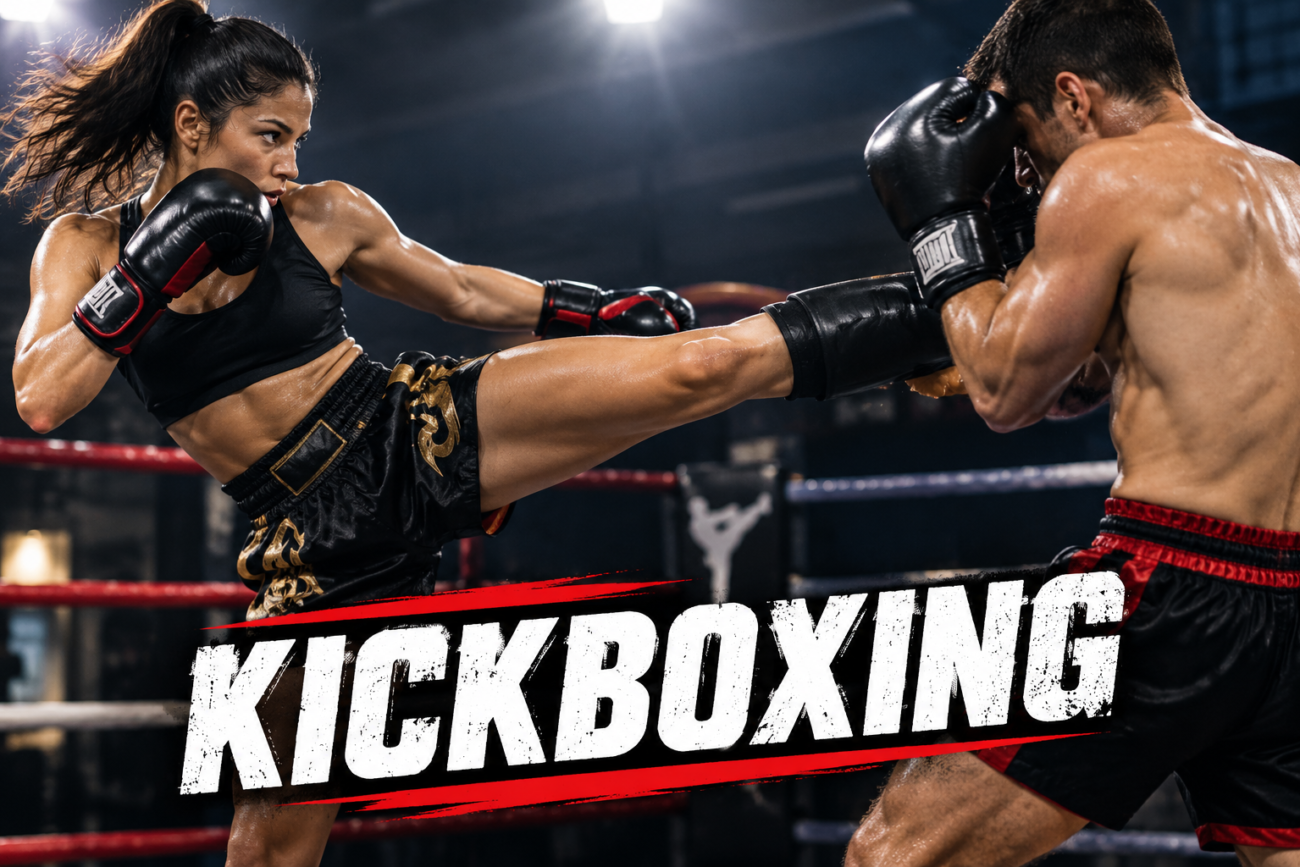
Kickboxing is a striking combat sport that combines punches and kicks with structured movement, defense, conditioning, and tactical decision-making. Although different kickboxing styles have their own rules and techniques, the sport generally focuses on using the hands and legs to attack while avoiding or blocking an opponent’s strikes.
For beginners, kickboxing can seem intimidating because of its connection to competitive fighting. In practice, however, training can range from light technical drills and fitness classes to full-contact competition. The level of contact, permitted techniques, and training intensity depend heavily on the gym, instructor, and ruleset.
This guide explains what kickboxing is, how it works, the fundamental techniques, common rules, training methods, benefits, equipment, and what newcomers can expect from their first classes.
Key Takeaways
- Kickboxing is a combat sport centered primarily on punches and kicks.
- Rules vary between kickboxing organizations and styles, so permitted techniques are not identical everywhere.
- Fundamental skills include stance, footwork, punches, kicks, blocks, and defensive movement.
- Training can improve cardiovascular fitness, coordination, balance, strength, and technical skills.
- Beginners can start with non-contact or controlled training before progressing to harder sparring.
- Proper coaching, protective equipment, warm-ups, and gradual progression are important parts of responsible training.
Main Article
What Is Kickboxing?
Kickboxing is a family of stand-up combat sports in which competitors use combinations of punches and kicks under a defined set of rules.
Unlike grappling-focused martial arts, traditional kickboxing competition generally takes place while both athletes are standing. Depending on the ruleset, fighters may be allowed to use techniques such as punches, roundhouse kicks, front kicks, and other strikes.
The term kickboxing can refer to several different rule systems rather than one universally standardized sport. Japanese kickboxing, American-style kickboxing, Dutch-style kickboxing, and other formats can differ in permitted strikes, clinching rules, scoring, and competition structure.
That distinction matters because someone learning kickboxing at one gym may encounter techniques or rules that are different from those taught elsewhere.
How Does Kickboxing Work?
In competition, two athletes generally face each other in a ring and attempt to score effective legal strikes while defending themselves.
A typical match involves several rounds separated by short rest periods. Judges evaluate the action according to the ruleset, with scoring commonly considering factors such as clean strikes, effective offense, defense, and overall control of the bout.
A fighter’s success is not simply about hitting hard. Timing, distance, accuracy, balance, movement, defense, and the ability to combine techniques all play important roles.
For example, a basic combination might involve:
- Moving into range.
- Throwing a jab.
- Following with a cross.
- Adding a low or body kick where permitted.
- Returning to a defensive stance.
The exact techniques and scoring value depend on the competition rules.
The Main Styles of Kickboxing
There is no single ruleset that represents every form of kickboxing.
American-Style Kickboxing
American-style kickboxing traditionally emphasizes punches and kicks delivered above the waist, although rules can vary between organizations and eras.
Because rules differ, competitors should always check the specific regulations of the event rather than assuming every American-style competition follows identical restrictions.
Japanese Kickboxing
Japanese kickboxing developed as a competitive striking sport incorporating techniques influenced by karate, boxing, and other martial arts.
Modern Japanese promotions and organizations may have their own detailed rules concerning scoring, clinching, knees, and other techniques.
Dutch-Style Kickboxing
Dutch kickboxing is particularly associated with combinations of boxing punches and powerful kicks. Training often emphasizes combinations, pressure, defensive movement, pad work, and conditioning.
It is better understood as a training and fighting approach than as a single universal competition ruleset.
Muay Thai and Kickboxing
Muay Thai and kickboxing are closely related striking sports, but they are not identical.
Muay Thai traditionally incorporates punches, kicks, elbows, knees, and extensive clinch work. Many kickboxing rulesets restrict some of these techniques, particularly elbows and prolonged clinching.
The differences become especially important when moving from one sport to another.
Essential Kickboxing Techniques
Beginners do not need to master dozens of techniques immediately. Building a strong foundation is more useful than trying to learn everything at once.
Fighting Stance
A balanced stance allows a fighter to attack, defend, and move efficiently.
A typical stance involves:
- Feet positioned for balance and mobility.
- Knees slightly bent.
- Hands held near the head.
- Chin protected.
- Weight distributed so movement remains easy.
- Eyes focused on the opponent.
The exact stance varies according to a fighter’s style, experience, and whether they use an orthodox or southpaw position.
Jab
The jab is a straight punch thrown with the lead hand.
It can be used to:
- Measure distance.
- Disrupt an opponent’s rhythm.
- Set up combinations.
- Create openings.
- Maintain pressure.
Although it looks simple, a technically strong jab can become one of the most useful tools in a striker’s arsenal.
Cross
The cross is a straight rear-hand punch. It generally involves coordinated movement from the feet, hips, torso, and shoulder.
The jab-cross combination is one of the first combinations many beginners learn.
Hook
A hook travels along a curved path rather than straight toward the target.
Hooks can be thrown with either hand and can target legal areas depending on the ruleset. Good technique requires control, balance, and proper body rotation rather than simply swinging the arm.
Uppercut
The uppercut is a rising punch that can be delivered from either side.
It is commonly practiced as part of combinations and requires proper distance and positioning to work effectively.
Front Kick
The front kick, sometimes called a push kick in certain contexts, uses the leg to strike or push an opponent away.
Its purpose can include controlling distance, interrupting forward movement, or creating space.
Roundhouse Kick
The roundhouse kick is one of the most recognizable kicking techniques.
The leg travels in an arc toward the target, with mechanics varying according to the specific style. Proper instruction is important because balance, hip rotation, supporting-foot position, and recovery all affect technique.
Defensive Techniques
Kickboxing is not just about attacking. Defensive skills are essential.
Common defensive movements include:
- Blocking.
- Parrying.
- Slipping.
- Rolling.
- Checking kicks.
- Stepping away from attacks.
- Maintaining distance.
- Returning to a protective stance.
A beginner should learn defense alongside offense rather than treating it as a later skill.
Understanding Kickboxing Rules
Kickboxing rules vary considerably between organizations, so there is no universal list of techniques that applies to every competition.
However, competition rules commonly address areas such as:
- Legal and illegal strikes.
- Target areas.
- Number and length of rounds.
- Rest periods.
- Knockdowns.
- Knockouts.
- Clinching.
- Fouls.
- Scoring.
- Referee interventions.
- Protective equipment.
- Weight classes.
Some rulesets permit techniques that others prohibit. For example, knees, elbows, or certain forms of clinching may be restricted or excluded depending on the event.
Before competing, athletes should read the rules issued by the relevant organization or promotion.
How Is Kickboxing Scored?
Scoring systems vary, but judges generally assess effective legal actions during each round.
Factors can include:
- Clean and effective strikes.
- Accuracy.
- Effective aggression.
- Defense.
- Ring control or positioning.
- Overall effectiveness under the applicable rules.
A fighter does not necessarily win a round simply by throwing the most punches or kicks. The quality and effectiveness of the legal techniques matter.
Professional and amateur competitions can also have different regulations, so spectators should consult the ruleset when trying to understand a particular decision.
What Does a Kickboxing Training Session Include?
A beginner class usually involves several stages rather than continuous fighting.
Warm-Up
Training may begin with activities designed to raise body temperature and prepare the muscles and joints for movement.
Examples include:
- Light skipping.
- Jogging.
- Dynamic mobility exercises.
- Footwork drills.
- Bodyweight movements.
Technique Practice
The instructor may demonstrate individual punches, kicks, defensive movements, or combinations.
Students then practice these techniques repeatedly to develop coordination and consistency.
Pad Work
During pad work, one person holds focus mitts or kick pads while the other performs specified combinations.
This allows students to practice timing, accuracy, movement, and combinations in a controlled environment.
Heavy-Bag Training
Heavy bags provide resistance for practicing punches and kicks.
They can be useful for developing technique, rhythm, conditioning, and controlled power. However, hitting a bag harder does not automatically mean better technique.
Partner Drills
Partner exercises allow students to practice distance, reactions, defense, and controlled combinations.
A responsible class should match the intensity of partner exercises to the participants’ experience.
Sparring
Sparring is controlled practice against another student.
It does not have to mean fighting at maximum intensity. Technical sparring can emphasize movement, timing, defense, or specific combinations rather than attempting to hurt the training partner.
Beginners should not feel pressured to participate in hard sparring before they have developed basic skills and understand gym safety expectations.
Benefits of Kickboxing Training
Kickboxing can provide a demanding full-body workout while also developing technical skills.
Cardiovascular Fitness
Repeated combinations, footwork, pad rounds, bag work, and other drills can elevate the heart rate and challenge aerobic and anaerobic conditioning.
The amount of conditioning gained depends on the training frequency, intensity, and structure of the class.
Coordination
Kickboxing requires the hands, feet, eyes, and torso to work together.
Learning to punch while moving, defend and counter, or combine punches with kicks can improve coordination and body awareness.
Balance and Movement
Kicking requires control of the supporting leg while the other leg moves toward a target.
Footwork also requires constant adjustment of position, which can make balance and movement an important part of training.
Strength and Muscular Endurance
Kickboxing does not replace dedicated resistance training for every strength goal, but repeated striking and movement can challenge muscles throughout the body.
Training may particularly involve the legs, hips, core, shoulders, arms, and back.
Stress Management
Physical activity can be a useful part of a healthy lifestyle, and many people enjoy combat-sport training because it provides structured movement and concentration.
Individual experiences vary, so kickboxing should not be treated as a guaranteed solution for stress or emotional problems.
Self-Defense Skills
Kickboxing develops practical striking, movement, distance-management, and defensive skills.
However, real-world self-defense is more complicated than sport fighting. Situational awareness, avoidance, de-escalation, escape, and understanding the legal context are also important.
What Equipment Do Beginners Need?
The exact equipment depends on the gym and training format, but common kickboxing equipment includes:
| Equipment | Main Purpose |
|---|---|
| Boxing gloves | Protect hands during striking |
| Hand wraps | Support and protect the hands and wrists |
| Shin guards | Protect the shins during training |
| Mouthguard | Protect teeth and mouth during contact |
| Headgear | Used in some forms of controlled contact training |
| Kick pads | Allow partners to practice kicks |
| Focus mitts | Practice punches and combinations |
| Heavy bag | Practice striking technique and conditioning |
| Appropriate clothing | Allows comfortable movement |
Beginners should ask their gym which equipment is required before purchasing everything.
Is Kickboxing Good for Beginners?
Yes, kickboxing can be adapted to different experience levels when instruction is appropriately structured.
A beginner class may focus primarily on stance, movement, basic punches, basic kicks, conditioning, and partner drills. There is no requirement to start with competitive fighting.
When choosing a gym, consider:
- Instructor experience and qualifications.
- Whether beginners receive clear instruction.
- How the gym manages sparring.
- Whether protective equipment is required.
- Cleanliness and general organization.
- Whether training intensity is appropriate for newcomers.
- Whether instructors encourage safe technical progression.
A supportive training environment should allow beginners to learn without unnecessary pressure.
How Often Should You Train Kickboxing?
There is no single ideal schedule for everyone.
A new student might begin with a small number of sessions each week and gradually increase training as their fitness and recovery improve.
Consistency generally matters more than attempting an extremely demanding schedule immediately.
A balanced routine can include:
- Kickboxing technique sessions.
- Rest or recovery days.
- General cardiovascular activity.
- Strength training where appropriate.
- Mobility work.
- Adequate sleep and nutrition.
People returning to exercise after a long period of inactivity should increase training gradually.
Kickboxing vs Boxing
The main difference is the range of striking techniques.
| Feature | Kickboxing | Boxing |
|---|---|---|
| Punches | Yes | Yes |
| Kicks | Yes | No |
| Footwork | Yes | Yes |
| Defensive movement | Yes | Yes |
| Clinching | Depends on ruleset | Limited by boxing rules |
| Primary striking range | Punching and kicking ranges | Punching range |
Boxing offers highly specialized training in punches, movement, defense, and ring strategy. Kickboxing adds kicks and therefore requires additional distance management, balance, and defensive considerations.
Neither sport can be fully understood from a simple list of techniques because each has different rules, tactics, and competitive traditions.
Kickboxing vs Muay Thai
Kickboxing and Muay Thai overlap significantly, but their competition rules can differ.
Muay Thai traditionally emphasizes the use of punches, kicks, knees, elbows, and clinching. Many kickboxing formats place greater restrictions on elbows, knees, or prolonged clinch activity.
The distinction is particularly important for anyone switching between sports because techniques that are legal in one ruleset may be illegal in another.
Common Beginner Mistakes
New students often make predictable technical mistakes while learning.
Trying to Hit Too Hard
Beginners sometimes focus on power before learning proper mechanics.
Controlled technique is generally more useful during early training because it allows students to develop balance, accuracy, timing, and efficient movement.
Dropping the Hands
Fatigue can cause beginners to lower their guard after combinations.
Building the habit of returning to a balanced defensive position is an important part of technical development.
Standing Too Rigidly
A rigid stance can make movement difficult.
Good movement requires enough stability for balance while retaining the ability to step, pivot, defend, and attack.
Holding the Breath
Some beginners unconsciously hold their breath while striking.
Learning to breathe naturally and exhale during techniques can make training feel more controlled.
Starting Hard Sparring Too Soon
Sparring should be introduced progressively.
Technical development, communication with training partners, protective equipment, and appropriate supervision are more important than proving toughness.
How to Get Started With Kickboxing
If you are interested in trying kickboxing, start by finding a reputable local gym with beginner-friendly classes.
Before your first session, ask:
- Is there a dedicated beginner class?
- What equipment should I bring?
- Is sparring required?
- How does the gym handle contact between beginners?
- Are trial classes available?
- What clothing and footwear are appropriate?
- What experience do instructors have?
For the first few sessions, concentrate on learning rather than trying to perform every technique perfectly.
A strong foundation in stance, movement, breathing, basic punches, basic kicks, and defense will make later training much easier.
Frequently Asked Questions
Is kickboxing the same as boxing?
No. Boxing focuses exclusively on punches under its own rules, while kickboxing generally combines punches with kicks. Specific kickboxing rules vary between organizations and styles.
Is kickboxing hard to learn?
Kickboxing can be physically demanding and technically challenging, but beginners can learn it progressively. Most introductory classes break techniques into manageable movements before combining them.
Does kickboxing involve real fighting?
It can, particularly in competition and sparring. However, many recreational classes emphasize fitness, technique, pad work, bag work, and controlled partner drills without requiring hard fighting.
What should I wear to a kickboxing class?
Comfortable athletic clothing that allows unrestricted movement is generally appropriate. Your gym may have specific requirements, particularly for footwear and protective equipment.
Do you need to be fit before starting kickboxing?
No. Fitness can develop through training. Beginners should start at an appropriate intensity and gradually increase workload as their conditioning improves.
Can kickboxing help with weight management?
Kickboxing can contribute to energy expenditure and physical fitness, but changes in body weight depend on overall activity, food intake, individual factors, and consistency. It should not be viewed as a guaranteed weight-loss method.
Is kickboxing dangerous?
Like other contact sports, kickboxing carries risks of injury. Risk can be reduced through qualified coaching, appropriate protective equipment, controlled progression, good technique, and sensible sparring practices.
Can children learn kickboxing?
Children can participate in age-appropriate martial arts programs, but training should be designed specifically for their age and development. Parents should look for qualified instructors, appropriate supervision, suitable protective equipment, and clear policies around contact and sparring.
Conclusion
Kickboxing is a versatile stand-up combat sport that combines punches, kicks, movement, defense, conditioning, and strategy. While the exact rules differ between styles and organizations, the fundamental goal of training is to develop effective technique within a controlled and structured environment.
For beginners, the most important skills are not simply powerful punches or kicks. Stance, footwork, balance, defense, timing, breathing, and consistent technical practice provide the foundation for long-term progress.
Whether your interest is fitness, learning a combat sport, developing striking skills, or eventually competing, starting with qualified instruction and gradual progression can make the experience more productive and sustainable.
