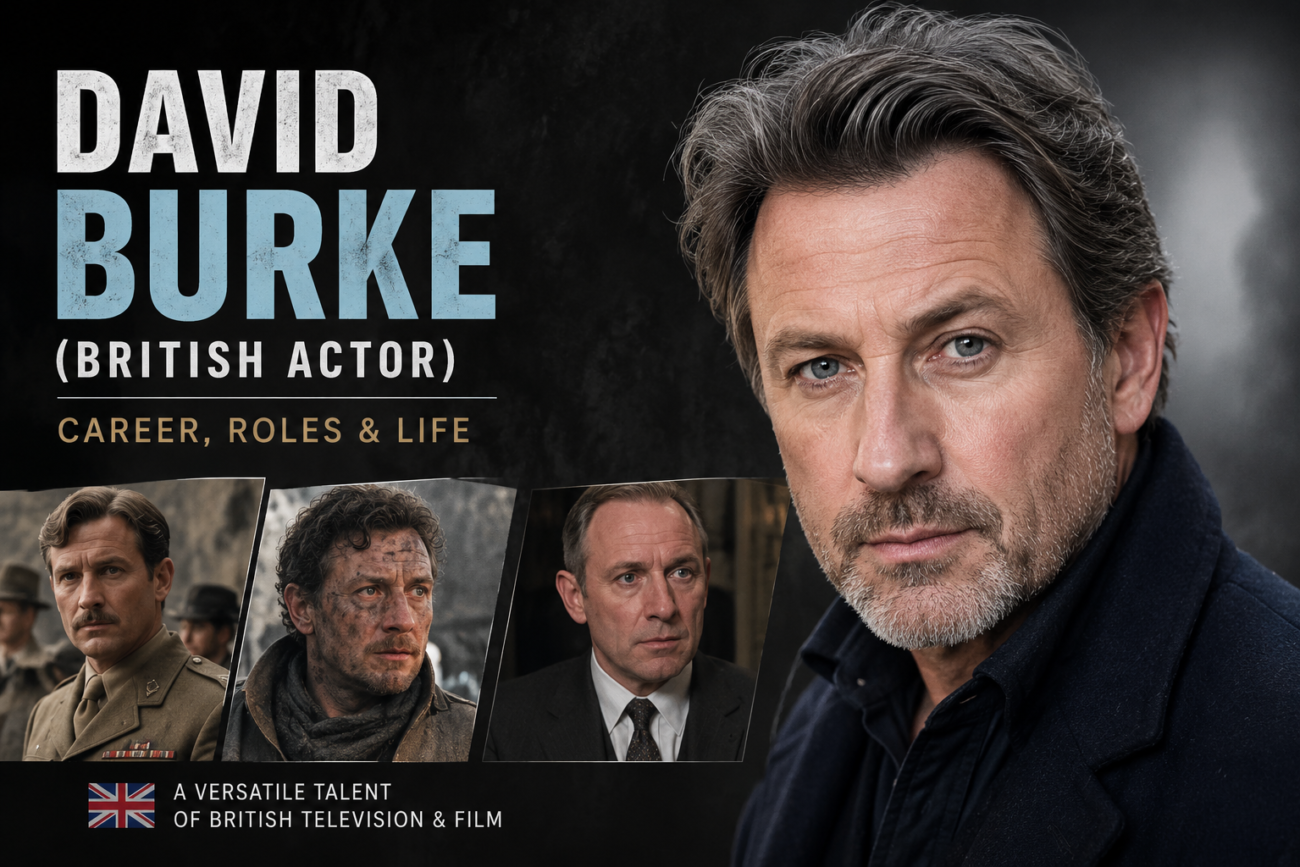
David Burke (British actor) was a distinguished English character actor whose career spanned theatre, television, and film. Although many viewers remember him most vividly as Dr. John Watson opposite Jeremy Brett in The Adventures of Sherlock Holmes, his professional life extended far beyond Baker Street.
Born in Liverpool in 1934, Burke trained at the Royal Academy of Dramatic Art (RADA) and developed a substantial stage career before becoming a familiar face on British television. His work included productions with major theatre companies such as the Royal Shakespeare Company and the National Theatre, as well as memorable screen appearances in Reilly, Ace of Spies, The Woodlanders, Midsomer Murders, and The Musketeers.
Burke died on May 10, 2026, aged 91. His career is particularly notable because he combined serious classical theatre with popular television, while his interpretation of Watson helped give the famous Sherlock Holmes companion greater intelligence, independence, and emotional depth.
Key Takeaways
- David Burke was an English actor born in Liverpool on May 25, 1934.
- He trained at the Royal Academy of Dramatic Art and graduated in 1960.
- He became widely known for playing Dr. John Watson opposite Jeremy Brett in The Adventures of Sherlock Holmes.
- His theatre career included work with the Royal Shakespeare Company and National Theatre.
- He originated the role of Niels Bohr in Michael Frayn’s acclaimed play Copenhagen.
- Burke died on May 10, 2026, at the age of 91.
Biography Table
| Detail | Information |
|---|---|
| Full Name | David Patrick George Burke |
| Date of Birth | May 25, 1934 |
| Age at Death | 91 |
| Birthplace | Liverpool, England |
| Nationality | British |
| Profession | Actor |
| Education | Royal Academy of Dramatic Art (RADA) |
| RADA Graduation | 1960 |
| Years Active | 1960–2018 |
| Known For | Dr. John Watson in The Adventures of Sherlock Holmes |
| Notable Stage Role | Niels Bohr in Copenhagen |
| Spouse | Anna Calder-Marshall |
| Children | Tom Burke |
| Date of Death | May 10, 2026 |
The dates and professional details above are supported by RADA, IMDb, and contemporary obituaries.
David Burke’s Early Life and Education
David Burke was born in Liverpool on May 25, 1934. He came from a family with Irish roots; his father worked as a ship’s steward. Later accounts of his life describe Burke as having overcome shyness and dyslexia before establishing himself as a professional actor.
His formal acting education took place at the Royal Academy of Dramatic Art, one of Britain’s best-known drama schools. RADA records confirm that Burke graduated with an Acting Diploma in 1960.
That training provided the foundation for a career that would move comfortably between classical theatre, television drama, radio, and film.
David Burke’s Theatre Career
While television eventually made Burke recognizable to a broad audience, theatre was central to his professional identity.
After graduating from RADA, he worked with several important British theatre organizations. His career included associations with the Bristol Old Vic, Royal Lyceum Company, Royal Shakespeare Company, and National Theatre.
His stage work demonstrated his range. He played characters in Shakespearean productions and major modern dramas, including roles such as:
- Anatol Kuragin in War and Peace
- Mephistopheles in Doctor Faustus
- Hector in Troilus and Cressida
- Reverend John Hale in The Crucible
- John of Gaunt in Richard II
- Niels Bohr in Copenhagen
These roles show why Burke was regarded as more than a television character actor. His professional background was firmly rooted in the British theatre tradition.
Niels Bohr in Copenhagen
One of Burke’s most significant theatrical achievements came with Michael Frayn’s Copenhagen.
Burke originated the role of Danish physicist Niels Bohr when the play premiered at the National Theatre in 1998. The production became a major theatrical success and ultimately ran for hundreds of performances.
The role was especially significant because it required the actor to handle complicated historical and philosophical material while maintaining a believable human relationship between the characters.
David Burke as Dr. John Watson
For many viewers, the defining screen role of David Burke (British actor) was Dr. John Watson in Granada Television’s The Adventures of Sherlock Holmes.
The series premiered in the 1980s and starred Jeremy Brett as Sherlock Holmes. Burke played Watson during the early part of the series, appearing in 13 episodes across the initial run.
His interpretation was important because it moved away from portrayals of Watson as merely a bumbling companion. Burke presented Watson as intelligent, capable, observant, and emotionally engaged in Holmes’s investigations.
The Guardian’s obituary described his Watson as a lively and intelligent interpretation of the character.
David Burke and Jeremy Brett
Burke’s partnership with Jeremy Brett became one of the memorable elements of the Granada Sherlock Holmes adaptation.
Brett’s Holmes was intense, eccentric, and highly theatrical, while Burke’s Watson provided a more grounded presence. This contrast helped create a convincing partnership between the two characters.
Burke’s performance also reflected Arthur Conan Doyle’s original conception of Watson as a competent medical professional and reliable companion rather than simply comic relief.
Why Did David Burke Leave The Adventures of Sherlock Holmes?
Burke left the Sherlock Holmes production after its early run.
One important factor was a theatre opportunity: he and his wife, actress Anna Calder-Marshall, were invited to join the Royal Shakespeare Company. Family considerations also played a role in the decision. Their son Tom was still very young at the time.
Burke was subsequently replaced as Watson by Edward Hardwicke, who continued the role for later Granada Sherlock Holmes productions.
Interestingly, Burke himself had already appeared in a Sherlock Holmes adaptation before becoming Watson. In 1965, he played Sir George Burnwell in the BBC production of The Adventure of the Beryl Coronet.
Other Notable Television Roles
Burke worked extensively in British television throughout his career.
One of his most notable performances outside Sherlock Holmes was Joseph Stalin in Reilly, Ace of Spies. He appeared in the final two episodes of the series.
His television work also included appearances in productions such as:
- The Woodlanders
- The Love School
- Coronation Street
- Midsomer Murders
- The Bill
- Poirot
- The Inspector Lynley Mysteries
- The Musketeers
His screen career demonstrates the consistency of his work as a character actor. Rather than being associated with only one genre, Burke appeared in historical dramas, detective stories, literary adaptations, and contemporary television.
David Burke’s Film Career
Although Burke was particularly prominent on television and stage, he also appeared in films.
His later film credits included The Woman in Black and The Young Messiah. He was often cast in authoritative or character-driven roles that suited his theatrical experience.
His film appearances were part of a much broader body of work. For Burke, cinema was one component of a career that remained strongly connected to theatre and television.
David Burke and His Family
David Burke was married to actress Anna Calder-Marshall. The couple worked within the British theatre world and were professionally connected to several major productions and companies.
Their son, Tom Burke, also became a successful actor. Tom has appeared in television, film, and theatre, including the BBC series The Musketeers. David and Tom Burke appeared together on screen on several occasions.
Their shared profession created an unusual connection between two generations of British actors.
David Burke and Tom Burke
The relationship between David Burke and Tom Burke is of particular interest to viewers who follow British acting families.
Tom Burke developed an acting career of his own rather than simply following his father’s professional path. The two nevertheless shared screen appearances, including the 2006 BBC adaptation Number 13 and later The Musketeers.
Their careers therefore provide an interesting example of a British theatrical tradition continuing across generations.
David Burke’s Acting Style and Legacy
Burke’s career is notable for its versatility.
He could play literary and classical characters on stage, historical figures such as Stalin, and familiar television personalities without being confined to one type of role.
His Watson remains particularly significant. The character had frequently been treated as a secondary or comic figure in earlier adaptations, but Burke emphasized Watson’s intelligence and emotional sensitivity. That approach helped present the character as a genuine partner to Holmes.
His work in Copenhagen also demonstrates another side of his legacy. Originating the role of Niels Bohr placed him at the center of an important modern play and showed the depth of his stage career.
David Burke’s Final Years and Death
David Burke continued to be associated with acting for many years before retiring from the profession in 2018, according to IMDb’s biographical record.
He died on May 10, 2026, at the age of 91. His death was reported in contemporary obituaries that highlighted both his theatrical career and his influential portrayal of Dr. Watson.
His passing marked the end of a long career that connected several generations of British theatre and television.
Was David Burke Only Known for Sherlock Holmes?
No. Although Dr. Watson was arguably his best-known television role, describing Burke only as the actor who played Watson would overlook much of his career.
His professional achievements included:
- Training at RADA.
- Working with major British theatre companies.
- Appearing in Shakespearean and classical productions.
- Originating Niels Bohr in Copenhagen.
- Playing Joseph Stalin in Reilly, Ace of Spies.
- Appearing in numerous British television dramas.
- Working alongside his son, Tom Burke, in screen productions.
Taken together, these accomplishments show the breadth of his career.
Frequently Asked Questions
Who was David Burke?
David Burke was an English character actor known especially for playing Dr. John Watson opposite Jeremy Brett in The Adventures of Sherlock Holmes. He also had an extensive theatre and television career.
When was David Burke born?
David Burke was born on May 25, 1934, in Liverpool, England.
When did David Burke die?
David Burke died on May 10, 2026, aged 91.
What was David Burke best known for?
He was best known for playing Dr. John Watson in the early Granada Television adaptation The Adventures of Sherlock Holmes, alongside Jeremy Brett.
Did David Burke play Sherlock Holmes?
No. David Burke played Dr. John Watson, while Jeremy Brett played Sherlock Holmes in the Granada series.
Where did David Burke train as an actor?
He trained at the Royal Academy of Dramatic Art (RADA) and graduated in 1960.
Was David Burke related to actor Tom Burke?
Yes. David Burke and Tom Burke were father and son. Both pursued careers as actors and appeared together in screen productions.
What other famous role did David Burke play?
Among his notable television performances was Joseph Stalin in Reilly, Ace of Spies. He also had an important stage career, including originating the role of Niels Bohr in Copenhagen.
Conclusion
David Burke‘s career was far broader than his association with Sherlock Holmes might initially suggest. As Dr. John Watson, he brought intelligence, warmth, and independence to a character who had often been reduced to comic relief. His partnership with Jeremy Brett became one of the defining elements of Granada Television’s acclaimed Sherlock Holmes adaptation.
Away from television, Burke established himself as a serious theatre actor, working with organizations including the Royal Shakespeare Company and National Theatre. His creation of Niels Bohr in Copenhagen demonstrated the depth of his stage career, while roles such as Joseph Stalin showed his versatility on screen.
For readers researching David Burke (British actor), his legacy is best understood as that of a versatile British performer whose career crossed classical theatre, television, film, and literary drama. He died in 2026 at 91, leaving behind a substantial body of work and a memorable interpretation of one of literature’s most enduring supporting characters.
