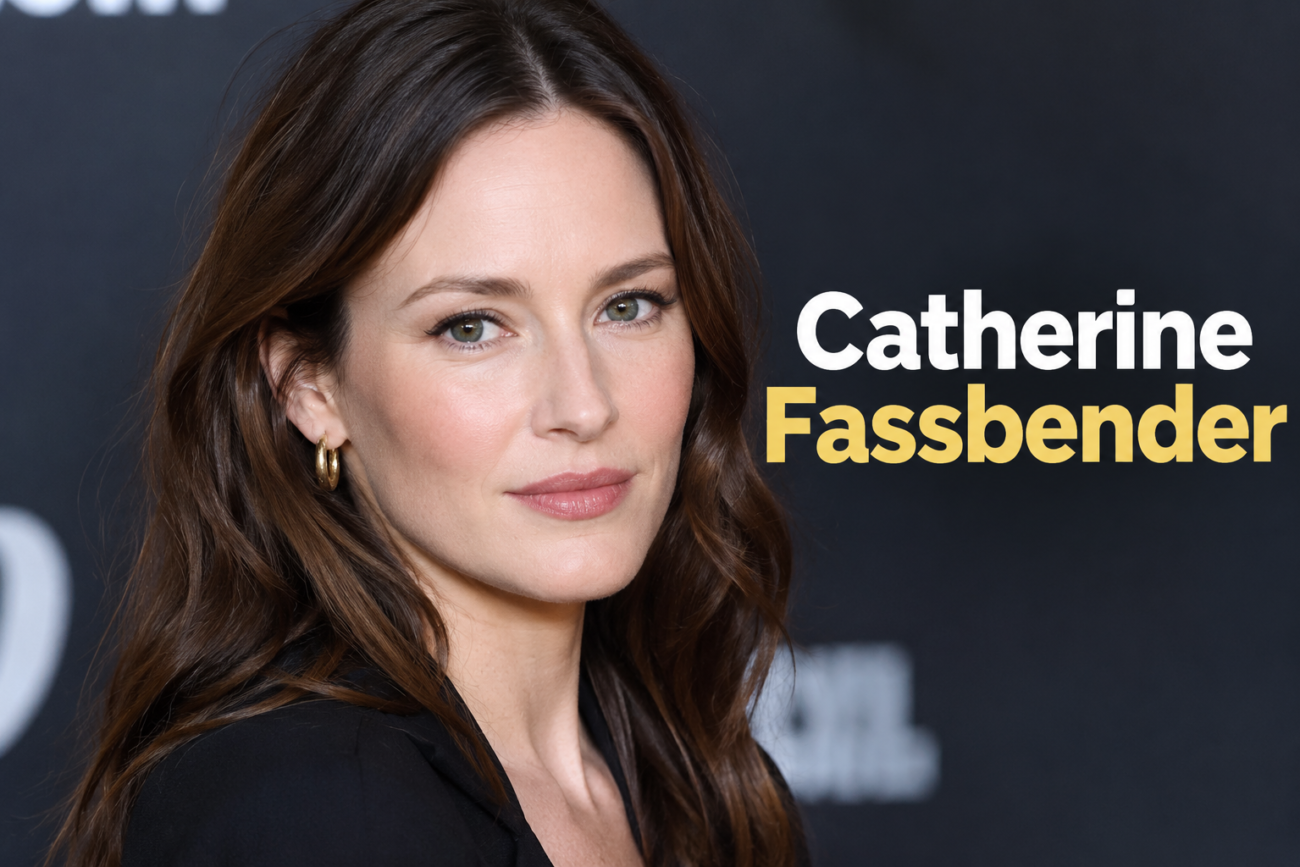
The name Catherine Fassbender may lead readers to search for information about a person’s identity, family background, personal history, and public profile. However, finding reliable information about someone with a limited online presence can be challenging, particularly when search results contain incomplete details or information about people with similar names.
Understanding who Catherine Fassbender is requires a careful distinction between verified facts, reasonable questions, and details that have not been established through trustworthy public sources. A name appearing in search results does not automatically confirm a person’s biography, profession, family connections, or personal circumstances.
This article examines the available context surrounding the search for Catherine Fassbender, explains what readers should look for when researching her background, and addresses common questions about her identity. The goal is to provide a clear, responsible overview without presenting speculation as fact.
Key Takeaways
-
Catherine Fassbender is a name that people may search for when looking for biographical or personal background information.
-
Reliable identification requires evidence that connects the name to a specific individual.
-
Her date of birth, birthplace, education, profession, and other biographical details should not be assumed without trustworthy confirmation.
-
People with similar names may appear in search results, making identity verification important.
-
Publicly documented information should be distinguished from rumors, assumptions, and unverified online claims.
-
Further reliable source material is needed to establish a detailed biography confidently.
Biography Table
The following table summarizes the information that can responsibly be presented without making unsupported claims.
| Biographical Detail | Information |
|---|---|
| Full Name | Catherine Fassbender |
| Date of Birth | Not reliably established |
| Age | Not reliably established |
| Birthplace | Not reliably established |
| Nationality | Not reliably established |
| Profession | Not reliably established |
| Education | No confirmed information available |
| Years Active | Not established |
| Known For | A detailed public profile has not been verified |
| Major Achievements | No verified achievements identified |
| Estimated Net Worth | No reliable estimate established |
This table should not be interpreted as evidence that Catherine Fassbender has no professional accomplishments or public connections. It simply distinguishes information that can be confidently stated from details that require further verification.
Who Is Catherine Fassbender?
Catherine Fassbender is a psychologist and cognitive neuroscience researcher whose professional work has focused on understanding how the brain supports attention, decision-making, and behavioral control. She has pursued an academic career spanning research institutions in Ireland and the United States.
Her professional profile is associated with Dublin City University (DCU), where she joined the School of Psychology in September 2019. Her research interests include attention-deficit/hyperactivity disorder (ADHD), substance dependence, cognitive functioning, and factors that may contribute to relapse among people recovering from substance use disorders.
Catherine is also known in public biographical coverage as the sister of actor Michael Fassbender. Although her family connection attracts interest from entertainment audiences, her professional career centers on psychological research and university teaching.
Her background illustrates how a person can attract public curiosity through a famous relative while building a distinct professional identity in a different field.
Catherine Fassbender’s Education and Academic Background
Catherine Fassbender’s educational background provides important context for understanding her research career. Her university training combined psychology, statistics, and cognitive neuroscience, equipping her to investigate the relationship between brain activity and human behavior.
Undergraduate Studies in Psychology
Fassbender earned a bachelor’s degree in psychology from University College Dublin in 1999. This education provided the foundation for her subsequent work in neuroscience and psychological research.
Psychology examines how people think, feel, learn, and behave. Cognitive neuroscience extends this field by investigating the brain mechanisms associated with those processes.
This combination is particularly relevant to researchers who study attention, impulse control, memory, and decision-making.
Graduate Training at Trinity College Dublin
After completing her undergraduate studies, Fassbender continued her education at Trinity College Dublin.
She received a graduate diploma in statistics in 2002 and completed a PhD in cognitive neuroscience in 2005. Her doctoral research examined cognitive control using functional magnetic resonance imaging, commonly known as fMRI.
This imaging technique enables researchers to investigate patterns of brain activity associated with particular tasks and mental processes.
Her statistical training was also important because neuroscience research often involves analyzing complex datasets, comparing experimental conditions, and identifying patterns in brain and behavioral measurements.
Postdoctoral Research in the United States
Following her doctorate, Fassbender continued her research in the United States.
She undertook postdoctoral work at the University of Maryland, Baltimore, where she investigated cognitive control in children and adolescents with ADHD.
In 2007, she moved to the University of California, Davis MIND Institute and Department of Psychiatry. Her work there expanded her experience in developmental neuroscience and research into attention-related difficulties.
In 2008, she received a Klingenstein Third Generation Foundation postdoctoral fellowship in ADHD, supporting her continued research in this area.
These experiences helped establish the research foundation for her later work in academic psychology and behavioral health.
Catherine Fassbender’s Career in Psychology and Neuroscience
Fassbender’s professional career has involved research, academic appointments, collaboration, and teaching. Her work explores how differences in brain function relate to behavior and how this knowledge might contribute to better approaches to identifying and addressing clinical difficulties.
Research at the University of California, Davis
Fassbender became a member of the University of California, Davis MIND Institute faculty in 2012.
During her time at UC Davis, her research interests extended beyond ADHD to include cognitive impairments associated with substance dependence and other clinical conditions.
She also worked with researchers at the university’s Imaging Research Center, examining questions related to cognition, reward processing, and substance use.
In 2013, she received the Joe P. Tupin Research Award from the UC Davis Department of Psychiatry. The recognition formed part of her academic record during this period.
She was promoted to associate professor in psychiatry in 2016, reflecting her progression through the university’s academic research environment.
Joining Dublin City University
In September 2019, Fassbender joined the School of Psychology at Dublin City University in Ireland.
Her responsibilities include academic teaching and research. She has served as module coordinator for courses associated with advanced psychological research methods and specialist study in psychology and wellbeing.
These responsibilities connect her research experience with the education of students developing their own knowledge of psychological science.
University teaching also requires researchers to explain complex concepts clearly, evaluate evidence critically, and help students understand how scientific methods are applied to real-world questions.
What Does Catherine Fassbender Research?
Fassbender’s research covers several connected areas of psychology and neuroscience. Her work seeks to understand the cognitive processes that influence behavior and how these processes may differ among people experiencing particular clinical conditions.
Cognitive Control and Decision-Making
Cognitive control refers to the mental processes that help people regulate attention, manage competing information, and choose actions suited to their goals.
These abilities are important in everyday activities, from concentrating on work to resisting distractions and evaluating consequences before making decisions.
Researchers study cognitive control to understand why some tasks become difficult under particular conditions and how brain systems contribute to behavioral regulation.
Fassbender’s background in cognitive neuroscience has included investigating these processes through behavioral experiments and brain-imaging techniques.
ADHD and Attention
Attention-deficit/hyperactivity disorder is a neurodevelopmental condition associated with patterns of inattention and/or hyperactivity and impulsivity.
Research into ADHD often examines attention, executive functioning, working memory, and the regulation of behavior.
Fassbender’s research has included studying cognitive control in children and adolescents with ADHD. This work contributes to the broader scientific effort to understand differences in cognitive functioning and how those differences relate to everyday challenges.
It is important to distinguish research findings from individual diagnoses. Findings from studies can improve scientific understanding, but they cannot establish a diagnosis for a particular person without an appropriate clinical assessment.
Substance Dependence and Reward Processing
Another area of Fassbender’s research concerns cognition and reward processing in the context of substance dependence.
Substance use can involve complex interactions among learning, motivation, attention, decision-making, and environmental circumstances. Researchers investigate these processes to understand why patterns of use develop and why changing them can be difficult.
Studying reward processing can help scientists examine how the brain responds to experiences or cues associated with particular outcomes.
This research does not mean that every person who uses a substance will develop dependence. Instead, it examines factors that may contribute to different outcomes across individuals and circumstances.
Relapse Risk and Recovery
Fassbender has also investigated neural and behavioral factors associated with relapse risk among people recovering from substance use disorders.
Relapse is a complex issue influenced by multiple factors, which may include psychological processes, environmental pressures, social circumstances, and the characteristics of a person’s recovery journey.
Research into cognitive functioning and brain activity may help scientists identify patterns associated with increased vulnerability.
Such findings can inform future research and potentially contribute to more targeted approaches to prevention and support. However, no single brain measurement or behavioral characteristic can reliably explain every individual’s recovery experience.
Adolescent Development and Substance Use
Adolescence and young adulthood involve substantial changes in cognitive abilities, social experiences, and patterns of decision-making.
Researchers study these developmental periods to understand how attention, behavioral regulation, and environmental influences interact.
Fassbender has contributed to research examining development from adolescence into young adulthood, including work involving adolescent substance use.
This research area is relevant to prevention because understanding developmental risk factors may help researchers and practitioners identify opportunities for earlier support.
Catherine Fassbender’s Research Methods
Fassbender’s research background includes several methods used in modern psychological and neuroscience investigations.
| Research Method | Purpose |
|---|---|
| Behavioral experiments | Examine attention, decision-making, and cognitive performance |
| Functional neuroimaging | Investigate brain activity associated with specific tasks |
| Electrophysiology | Measure electrical activity associated with brain and cognitive processes |
| Statistical analysis | Identify patterns and evaluate evidence in research data |
| Collaborative clinical research | Explore relationships between cognition, behavior, and clinical conditions |
These methods provide different kinds of evidence. Behavioral experiments examine performance, while neuroimaging and electrophysiology offer additional ways to investigate the biological processes associated with that performance.
Combining methods can provide a more complete understanding than relying on one measurement alone.
Is Catherine Fassbender Related to Michael Fassbender?
Yes. Catherine Fassbender is publicly identified as the sister of actor Michael Fassbender.
Michael Fassbender is known for film roles in productions including X-Men: First Class, 12 Years a Slave, Steve Jobs, and The Killer. His international acting career has contributed to public interest in his family.
Catherine has followed a different professional path. Rather than working primarily in entertainment, she has pursued academic research and university teaching.
Their different careers illustrate why it is important to distinguish a family relationship from an individual’s own professional achievements.
Catherine Fassbender and Her Family Background
Public biographical accounts associate the Fassbender family with both Irish and German backgrounds. Michael Fassbender was born in Heidelberg, Germany, and grew up in Ireland.
Catherine’s connection to the family is documented in biographical coverage of the actor and in online records discussing his relatives.
However, details about Catherine’s private life should be approached carefully. Information about family relationships does not establish personal details such as her current residence, relationship status, or private activities.
Catherine Fassbender’s Public Profile and Privacy
Unlike her brother, Catherine Fassbender is primarily associated with academic and scientific work rather than mainstream entertainment.
This distinction helps explain why people searching for her may encounter fewer personal interviews, celebrity profiles, or lifestyle articles than they would find for a well-known actor.
Academic professionals often maintain public profiles focused on their institutional positions, research interests, publications, and teaching responsibilities. These records can provide meaningful information about professional accomplishments without revealing much about personal circumstances.
For readers researching Catherine, university biographies and academic publications are more useful starting points than celebrity gossip pages.
A responsible biography should also recognize that not every detail about a person needs to be publicly available. A lack of information about someone’s private life does not indicate that the information is unusual or that it should be inferred.
Catherine Fassbender’s Achievements and Professional Contributions
Fassbender’s documented professional milestones reflect her work in research and higher education.
Notable elements of her academic record include:
-
Earning a doctorate in cognitive neuroscience in 2005.
-
Receiving a postdoctoral fellowship in ADHD research in 2008.
-
Joining the University of California, Davis MIND Institute faculty in 2012.
-
Receiving the Joe P. Tupin Research Award in 2013.
-
Progressing to an associate professor appointment in psychiatry in 2016.
-
Joining Dublin City University’s School of Psychology in 2019.
-
Contributing to research and public understanding of addiction and brain function.
These milestones provide a more concrete picture of her professional background than speculation about her private life.
Her work also sits within broader scientific efforts to improve understanding of attention, cognitive functioning, substance dependence, and adolescent development.
The significance of individual studies depends on their methods, findings, limitations, and contribution to the wider evidence base. Academic appointments and awards offer useful context, but they should not be treated as proof that every research question has been resolved.
Catherine Fassbender’s Net Worth and Financial Information
Catherine Fassbender’s net worth has not been reliably established through authoritative public financial disclosures.
Because she is an academic researcher rather than a celebrity whose commercial earnings are routinely discussed in entertainment media, estimates appearing on general biography websites may lack a clear factual basis.
Academic salaries can vary according to country, institution, seniority, responsibilities, and other employment arrangements. A person’s job title alone is not sufficient to calculate their total wealth.
It is therefore more accurate to leave her net worth unspecified than to publish an invented figure.
Similarly, Michael Fassbender’s earnings or reported wealth should not be attributed to Catherine. Family relationships do not establish shared finances or individual assets.
Frequently Asked Questions
1. Who is Catherine Fassbender?
Catherine Fassbender is a psychologist and cognitive neuroscience researcher associated with Dublin City University. Her research interests include cognitive control, ADHD, substance dependence, and behavioral risk factors.
2. Is Catherine Fassbender Michael Fassbender’s sister?
Yes. Catherine Fassbender is publicly identified as the sister of actor Michael Fassbender, known for his work in film and television.
3. What does Catherine Fassbender do professionally?
She works in academic psychology and neuroscience, with experience in research and university teaching. Her work has examined cognitive processes and their relationship to clinical conditions and behavior.
4. Where did Catherine Fassbender study?
She earned a bachelor’s degree in psychology from University College Dublin, followed by a graduate diploma in statistics and a PhD in cognitive neuroscience from Trinity College Dublin.
5. What is Catherine Fassbender known for in research?
Her research has focused on cognitive control, ADHD, substance dependence, reward processing, relapse risk, and aspects of adolescent development.
6. Has Catherine Fassbender received any academic awards?
Yes. Her documented academic record includes the Joe P. Tupin Research Award from the University of California, Davis Department of Psychiatry in 2013. She also received a Klingenstein Third Generation Foundation postdoctoral fellowship in ADHD in 2008.
7. What is Catherine Fassbender’s age?
Her exact age has not been reliably established in the institutional biography discussed here. It is best not to assign a specific age without a dependable source confirming her date of birth.
8. What is Catherine Fassbender’s net worth?
No reliable public estimate of her net worth has been established. Without verified financial information, any specific figure would be speculative.
Conclusion
Catherine Fassbender is an academic researcher whose professional background combines psychology, cognitive neuroscience, and university teaching. Her education at University College Dublin and Trinity College Dublin, research experience in the United States, and subsequent appointment at Dublin City University help explain the development of her career.
Although she attracts public interest as Michael Fassbender’s sister, her professional identity is rooted in scientific research. Her work has explored cognitive control, ADHD, substance dependence, and behavioral factors associated with recovery and adolescent development.
For readers seeking to understand Catherine Fassbender, the most useful approach is to focus on verifiable academic records and documented professional contributions. This provides a clearer and more reliable picture than unconfirmed claims about her age, finances, or private life.
